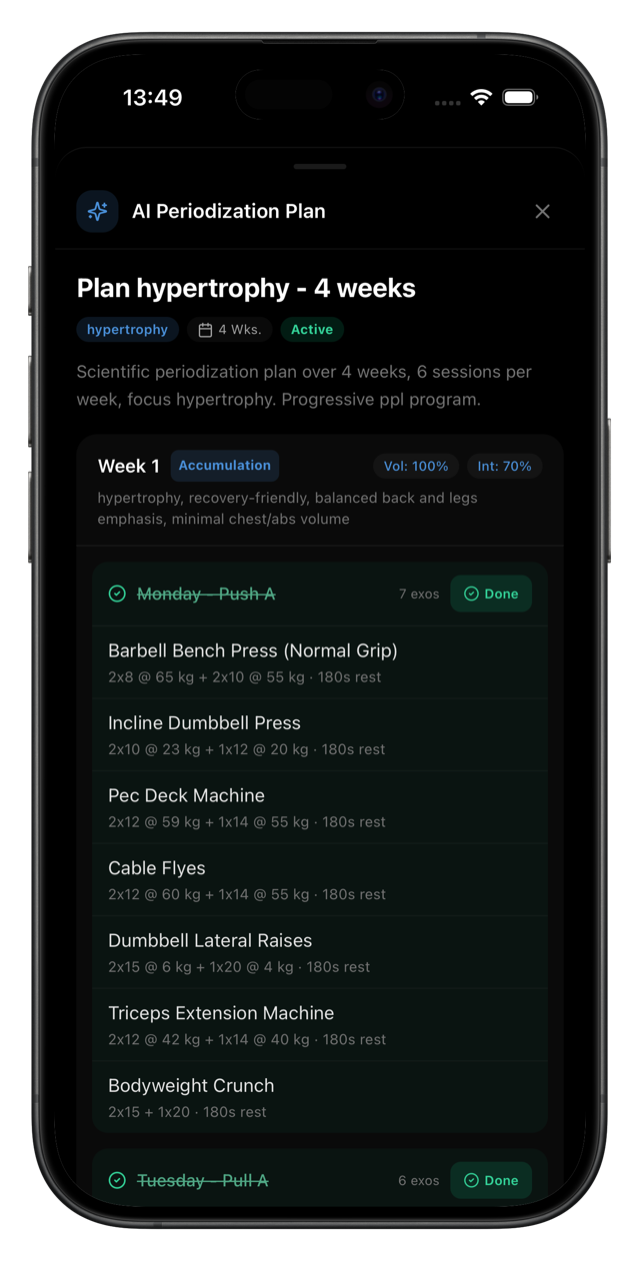
Looking for one more reason to push through your next session? The mental health benefits of strength training are now backed by hundreds of clinical studies, less anxiety, better mood, deeper sleep, stronger self-confidence. With AIVancePro, the Vance conversational AI coach adapts your program to your daily energy so every session counts for your mind as much as your muscles.
Why lifting reshapes your brain
Moving heavy loads doesn’t just activate muscle fibers. During and after a session, your body releases a cocktail of molecules that directly affect mood and anxiety.
The main mechanisms:
- Endorphins and endocannabinoids drive the post-workout feel-good sensation often called runner’s high, it happens after intense strength work too.
- BDNF (Brain-Derived Neurotrophic Factor) is a protein that promotes neuronal growth and survival. Resistance training reliably boosts it.
- Cortisol rises acutely during training, but chronic stress sensitivity drops over weeks.
- Serotonin and dopamine balance improves, explaining better mood.
- HPA axis adaptation means your stress response becomes more resilient with regular training.
Strength training isn’t only physical work. It’s a biological intervention on your brain.
The 7 proven psychological benefits
A 2018 JAMA Psychiatry meta-analysis covering 33 clinical trials and over 1,800 participants confirmed that resistance training significantly reduces depressive symptoms, regardless of baseline severity or training volume.
Documented benefits:
- Generalized anxiety reduction (-20 to -25% on clinical scales).
- Reduced depressive symptoms (comparable to brief psychotherapy for mild-to-moderate cases).
- Better sleep quality (faster onset, longer deep sleep).
- Higher self-esteem independent of aesthetic results.
- Better daily emotional regulation.
- Increased stress resilience at work and in personal life.
- Cognitive boost: working memory, attention, and executive function improve.
These effects appear within 6-8 weeks of consistent training at 2-3 sessions per week.
Anxiety and stress: what the barbell changes
If you’re among the roughly 20% of adults with chronic anxiety, the gym can become your most accessible regulation tool.
Three mechanisms at play:
- Immediate physiological release: muscular tension stored by stress drops after heavy sets.
- Controlled exposure: you learn to manage intense physical discomfort (the last rep), which strengthens your tolerance for general stress.
- Sense of mastery: you choose the load, you choose the difficulty. That control rewires your relationship with constraint.
Practical tip: if you arrive at the gym anxious after work, start with 5-10 minutes of progressive warm-up, then attack a compound (squat, bench, deadlift) at 70-80% 1RM across 4-5 sets. The anxiolytic effect is measurable within 90 minutes.
Depression and mood: clinical evidence
Randomized trials are clear. In 2020, a Cochrane review evaluated exercise against placebo and active treatments (psychotherapy, medication) for mild-to-moderate depression. Conclusion: exercise, and resistance training in particular, is as effective as first-line treatments, with fewer side effects.
For severe depression, lifting remains a complement, never a substitute for medical care (see disclaimer).
What actually works:
- Consistency beats intensity: 3 sessions/week sustained for 8 weeks beat 5 sessions/week for 3 weeks.
- Compound focus: squats, presses, rows, these recruit more mass and trigger a broader hormonal response.
- Visible progression: watching your loads climb on a log reinforces self-efficacy, a natural antidote to anhedonia.
Self-confidence and body image
Contrary to popular belief, strength training doesn’t boost confidence because you get more muscular. Studies show self-esteem gains appear before any visible physical change. What changes your inner dialogue is the act of keeping a promise with yourself, session after session.
For women in particular, recent research (notably a 2022 Body Image paper) shows resistance training improves body satisfaction far more than cardio alone or restrictive dieting, because it shifts focus from how I look to what my body can do.
How AIVancePro keeps you consistent (the real key)
The mental benefit of strength training hinges on one factor: consistency across weeks. And that’s exactly where most people drop off.
AIVancePro was built around conversation with Vance, your AI coach, to solve this:
- Daily adaptation: tell Vance you slept badly or got crushed by work, and he’ll lighten the session instead of forcing a rigid plan you’d skip altogether.
- Evolving plan: your program adjusts to your progression, available equipment, and schedule constraints.
- Conversational tracking: no manual spreadsheets. You talk, the app remembers.
- Available on iOS and Android. Free with 5 AI messages/month, or Pro at €6.99/month (first month €3.49) for 250 AI messages.
Goal: remove every friction between you and your next session, because the session you do despite fatigue is the one that builds your mental strength.
Starter program (3 sessions/week, full body)
If you’re new or returning after a break, here’s a simple framework:
Session A, Monday
- Squat: 4×6-8 reps
- Dumbbell bench press: 4×8-10
- Cable row: 4×10-12
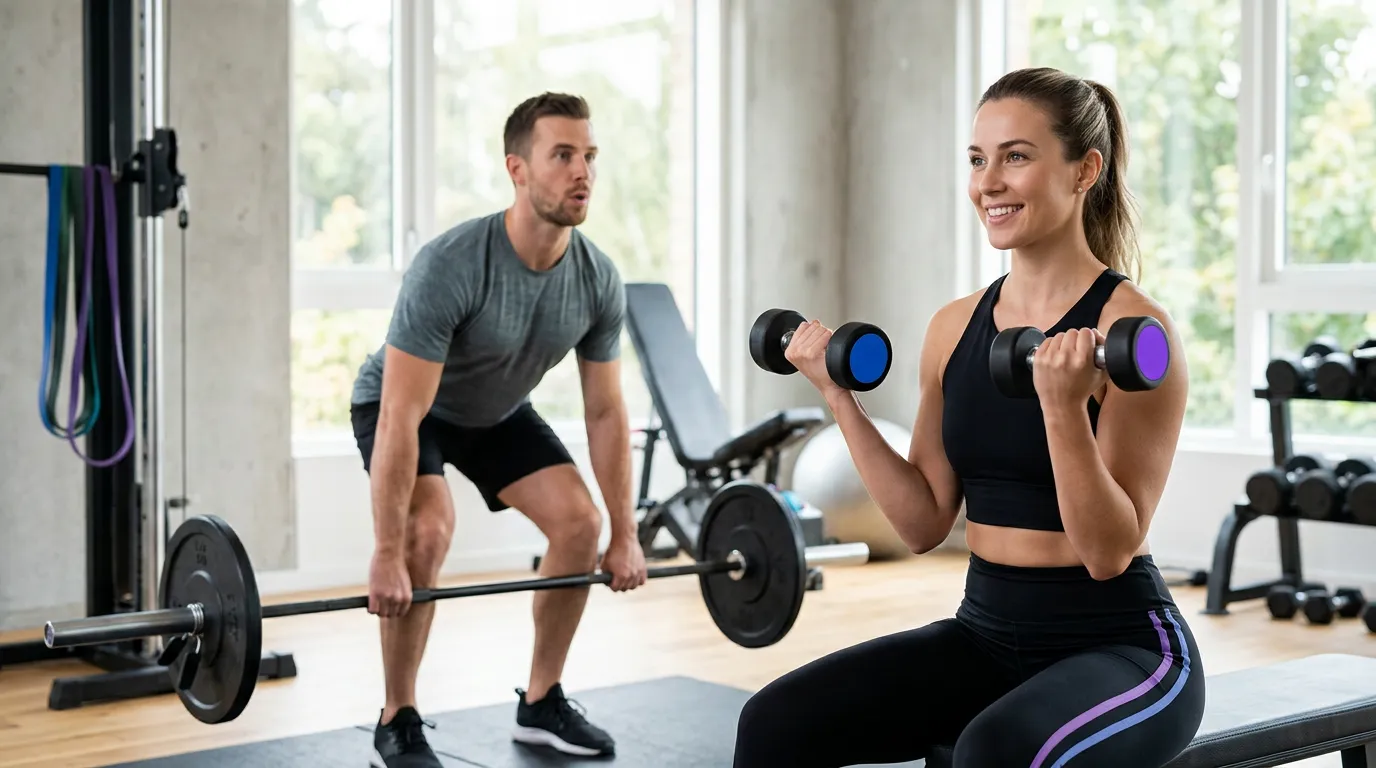
- Dumbbell curl: 3×10
- Plank: 3×40 s
Session B, Wednesday
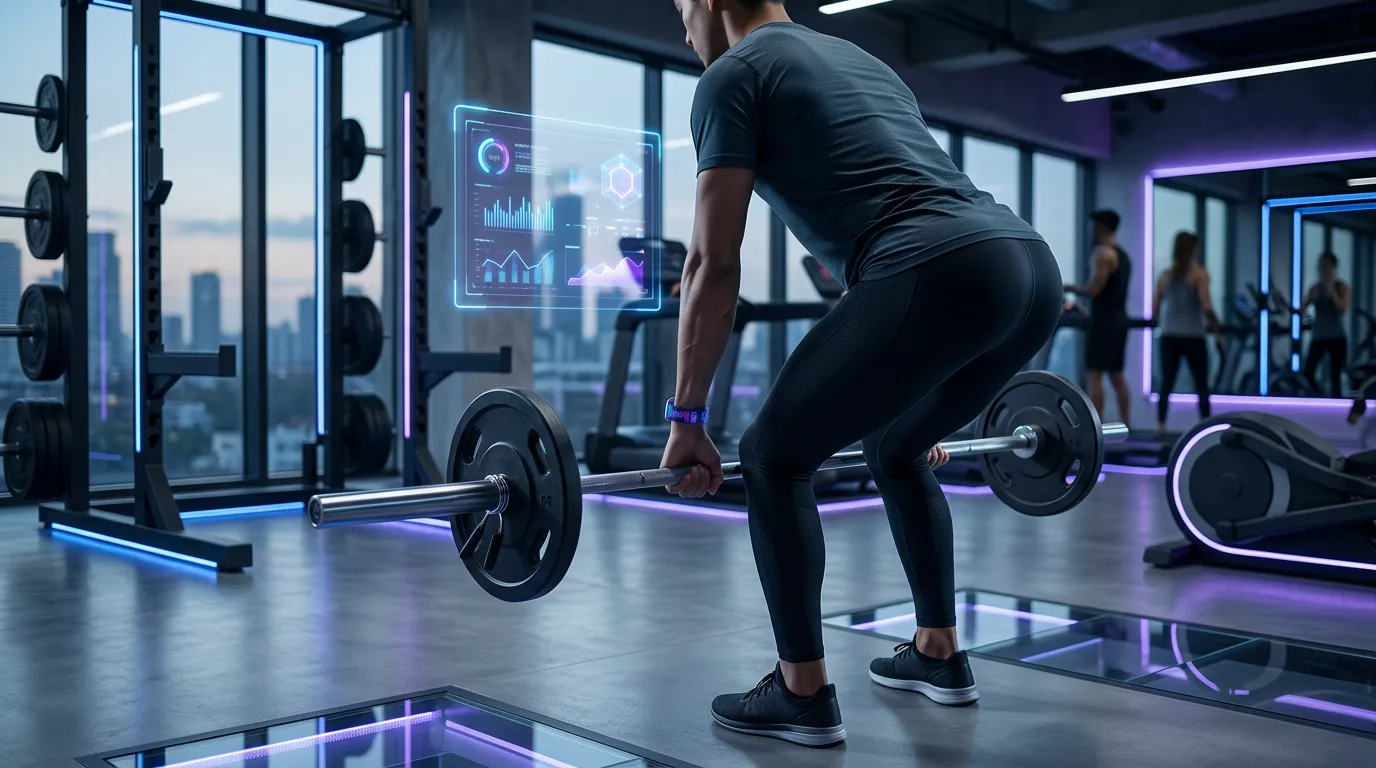
- Romanian deadlift: 4×6-8
- Dumbbell overhead press: 4×8-10
- Assisted pull-ups or lat pulldown: 4×8-10
- Tricep pushdown: 3×12
- Cable crunch: 3×12
Session C, Friday
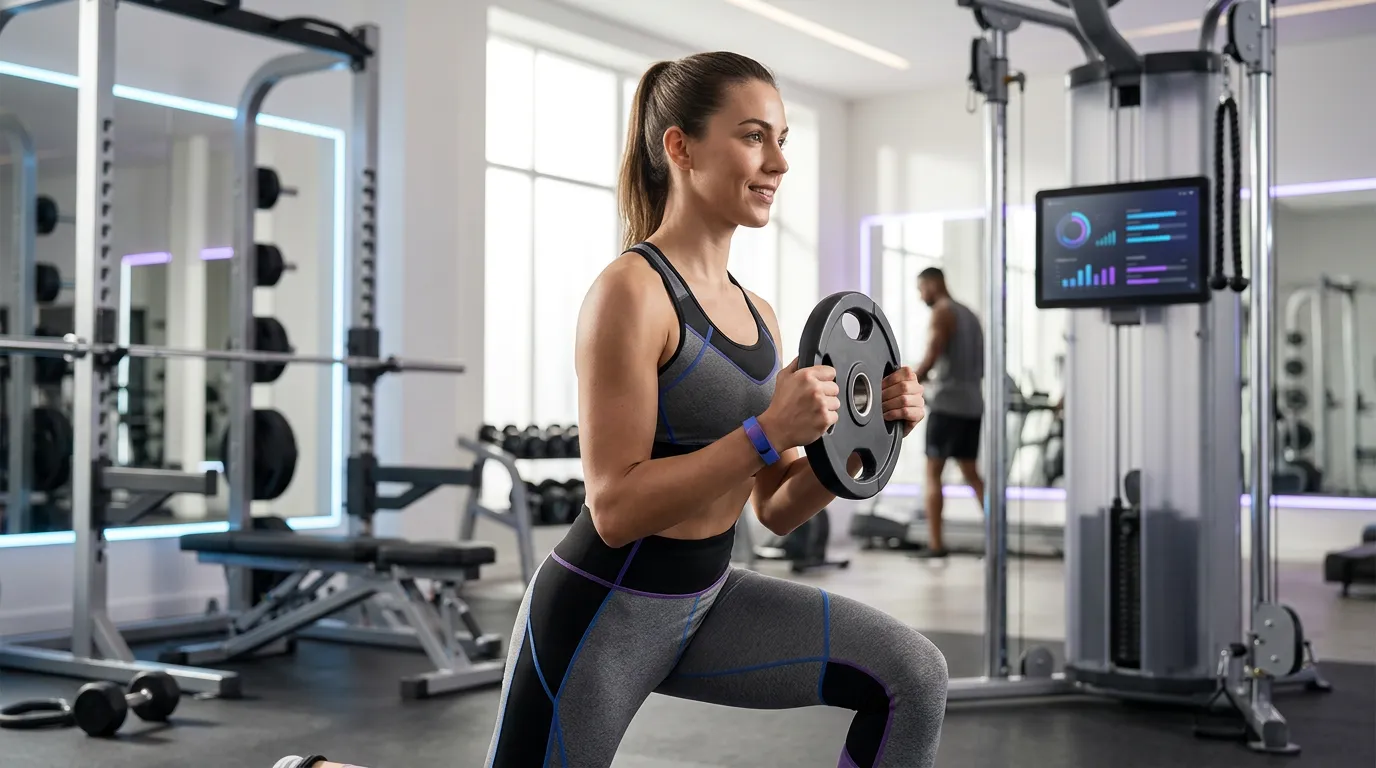
- Dumbbell lunges: 4×8/leg
- Incline bench press: 4×8-10
- One-arm dumbbell row: 4×10
- Lateral raises: 3×12
- Mountain climber: 3×40 s
Rest 60-90 s on compounds, 45-60 s on isolation. Load: finish the last rep hard but clean. If you can do 2 more reps, increase the load next session.
With AIVancePro, you can import this framework and let Vance evolve it based on your feedback after each session.
Conclusion
The mental health benefits of strength training aren’t gym-bro folklore anymore, they’re clinical science. Less anxiety, better mood, deeper sleep, confidence built on repeated actions: all of that comes as a bonus to your physical gains, provided you keep the consistency.
That’s where AIVancePro changes the game: Vance, your AI coach, adjusts your sessions to your real week, not to an ideal program you’d eventually abandon. Download the app on iOS and try your first month at €3.49 to see how a conversation can transform your consistency.
Health disclaimer: this article presents documented benefits but doesn’t replace medical advice. If you suffer from significant anxiety or depressive disorders, talk to your doctor or a mental health professional. Strength training can be an excellent complement but never a substitute for appropriate treatment.
FAQ
How long before I feel the mental benefits?
Acute effects (stress release, better mood) are noticeable from the first session, within 90 minutes of training. Lasting benefits on anxiety and depression typically appear between 6 and 8 weeks of consistent training at 2-3 sessions per week.
Cardio or strength training for mental health?
Both work. Cardio has a sharper effect on acute anxiety; strength training excels at self-esteem and depression. Ideal: combine them, 2-3 strength sessions and 1-2 cardio sessions per week.
Do I need to train hard for mental benefits?
No. Moderate-to-high intensity (70-85% 1RM) is enough. Going to failure systematically doesn’t add mental benefit and raises overtraining risk, which itself degrades mood.
Are the benefits the same for women?
Yes, and sometimes even stronger on body image and confidence. Recent studies show strength training improves female body satisfaction more effectively than cardio alone.
Is AIVancePro suitable for total beginners?
Yes. Vance asks your level, equipment, and goals on the first exchange, then generates a fitting program. You can ask any question by message, built for beginners as much as intermediates.
← Back to blog