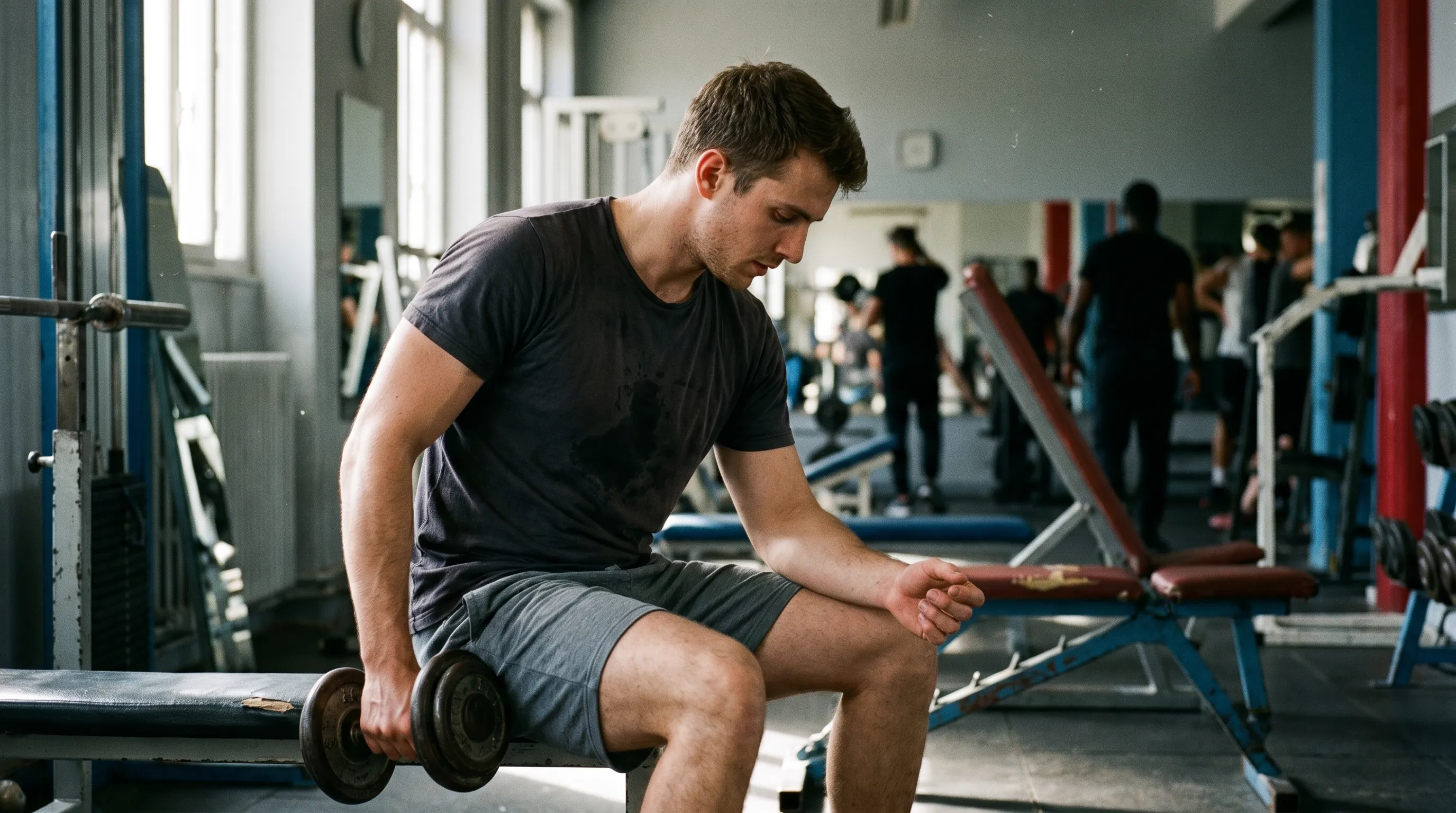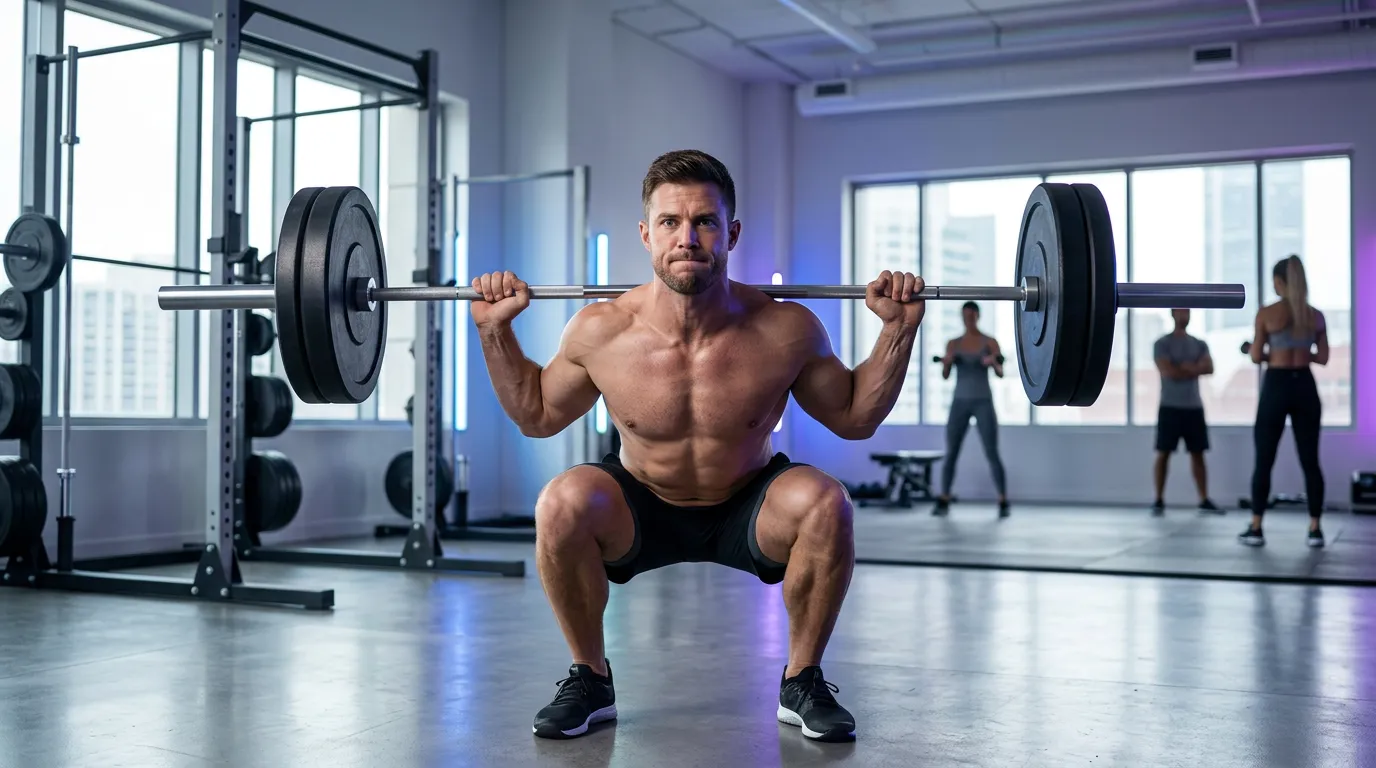
You crushed your workout, and now, 24 hours later, you can barely walk down the stairs. Sound familiar? Muscle soreness after working out is one of the most universal experiences in fitness, shared by beginners and seasoned athletes alike. The good news: in the vast majority of cases, post-workout muscle soreness is completely normal. It has a scientific name, DOMS (Delayed Onset Muscle Soreness), and it signals healthy physiological adaptation. Here’s everything you need to know to tell the difference between productive soreness and an actual injury.
What Is DOMS?
DOMS stands for Delayed Onset Muscle Soreness. It refers to the microscopic damage that occurs in muscle fibers during exercise, particularly during eccentric contractions, movements where the muscle lengthens under load.
Classic examples: the lowering phase of a squat, the return phase of a bicep curl, or bringing the barbell down during a bench press. These eccentric phases generate the most micro-tears in muscle tissue.
Important myth to bust: DOMS are not caused by lactic acid. Lactic acid clears from your muscles within 30-60 minutes after exercise. The real soreness kicks in 12 to 48 hours later, which is why you might feel fine right after your session and wake up stiff the next morning.
What you typically feel:
- Tightness and stiffness in the trained muscle
- Tenderness when you press on the muscle
- Slight reduction in strength and range of motion
- Occasional mild swelling
Here’s the key takeaway: DOMS signal adaptation, not damage. Your body is rebuilding those muscle fibers thicker and stronger than before. This is the supercompensation principle, the foundation of all muscle growth and strength development.
Why Does Soreness Peak 24-48 Hours After Your Workout?
The delay is explained by the inflammatory cascade your body launches in response to micro-tears:
Step 1, Micro-damage: Eccentric loading creates small tears in the muscle fiber structure.
Step 2, Immune response: Your immune system detects the damage and dispatches repair cells (macrophages, neutrophils, satellite cells) to the affected areas.
Step 3, Inflammatory mediators: Prostaglandins and cytokines sensitize the pain receptors (nociceptors) in the muscle tissue, and that’s the soreness you feel.
Step 4-48-hour peak: The inflammatory response typically peaks between 24 and 48 hours post-workout, then gradually subsides over the next 2-5 days.
This is why you should expect soreness to linger for a few days after an intense session, and why it generally resolves on its own without any special intervention. A soreness that persists beyond 7 days without improvement deserves attention.
Soreness vs Injury: How to Tell the Difference
This is the most critical distinction in training. Here’s a side-by-side comparison:
| Feature | DOMS (Normal Soreness) | Injury |
|---|---|---|
| When it starts | 12-48h after exercise | During or immediately after |
| Type of pain | Diffuse, general tenderness | Sharp, localized, intense |
| Range of motion | Slightly reduced | Severely limited |
| Duration | 2-5 days | Does not improve with rest |
| Swelling | Mild, symmetric | Significant, warm, asymmetric |
| Effect of movement | Improves after warm-up | Gets worse with activity |
Red flags that point to injury, not soreness:
- Pain localized to a joint rather than a muscle belly
- Sharp or shooting pain during movement
- Pain that gets worse, not better, over 5-7 days
- Dark-colored urine after intense training (possible rhabdomyolysis)
- Significant, warm, or asymmetric swelling
If any of these apply, stop training that area and consult a healthcare professional.
What Makes Muscle Soreness Worse?
Some factors reliably amplify DOMS. Understanding them helps you manage soreness proactively.
New exercises or unfamiliar movement patterns: Your nervous system and muscles aren’t adapted yet. The first time you do Romanian deadlifts or dips, expect serious soreness. This decreases significantly with repetition, it’s your body learning.
Sudden increases in volume or intensity: Jumping from 10 to 20 sets in a single session, or dramatically increasing load without progressive buildup, overloads your recovery capacity. The 10% rule (don’t increase weekly volume by more than 10%) exists for a good reason.
Eccentric-heavy exercises: Nordic hamstring curls, slow-lowering squats, or tempo bench press place maximum stress on muscle fibers and generate the most micro-tears compared to concentric-dominant movements.
Poor sleep: Growth hormone, essential for muscle repair, is primarily released during deep sleep. Chronic sleep deprivation leads to slower recovery and more intense soreness the next day.
Inadequate nutrition: Without sufficient protein and total calories, your muscles lack the raw materials to rebuild. A protein intake below 1.2g/kg/day significantly slows recovery.
Beginner status: New exercisers experience more frequent and intense DOMS. As your body adapts over weeks and months, the same workouts produce less soreness, this is the repeated bout effect.
How to Recover Faster From Muscle Soreness
Strategies backed by research
Adequate protein intake: Aim for 1.6 to 2.2g of protein per kg of bodyweight per day. Your muscles need amino acids to rebuild damaged tissue. Spread intake across 3-4 meals for optimal muscle protein synthesis throughout the day.
Quality sleep: 7-9 hours per night. Most muscle repair happens during deep sleep, when growth hormone secretion peaks. This is the single most underrated, and most powerful, recovery tool available to you.
Active recovery: Light activity, walking, easy cycling, yoga, increases blood flow to damaged muscles, accelerates metabolic waste clearance, and reduces subjective stiffness. The goal is gentle movement, not additional training stress.
Stay hydrated: Water facilitates nutrient transport to muscle tissue and helps clear inflammatory byproducts. Aim for at least 35ml per kg of body weight daily, more if you’re sweating heavily.
Cold water immersion: Research shows modest effects on reducing perceived soreness (roughly 15-20% reduction in subjective pain). Not essential, but useful during heavy training blocks.
Foam rolling and massage: Primarily help with perceived soreness and mobility rather than actual tissue repair. Still worthwhile for the subjective relief they provide.
What doesn’t work as well as people think
- Static stretching immediately post-workout has virtually no effect on DOMS prevention or reduction according to current research
- NSAIDs (ibuprofen, naproxen) reduce pain but may inhibit muscle protein synthesis and long-term adaptation when used regularly, save them for severe, debilitating cases only
When to See a Doctor
See a doctor or physical therapist if:
- Pain is localized to a joint rather than the muscle belly
- You notice dark brown or red urine after extremely intense training, this may indicate rhabdomyolysis, a medical emergency
- Soreness gets worse rather than better after 5-7 days of rest
- You experience chest pain, unusual shortness of breath, or heart palpitations during exercise
- Swelling is significant, warm, and asymmetric
- Symptoms persist beyond 7 days without clear improvement
Health disclaimer: This article is for informational purposes only and does not constitute medical advice. If you experience persistent, unusual, or severe pain, consult a qualified healthcare professional.
Train Smarter, Not Harder
The goal isn’t to avoid muscle soreness entirely, some level of DOMS is a natural part of progressive training. The goal is to manage it intelligently: progress gradually, prioritize recovery, and listen to your body’s signals.
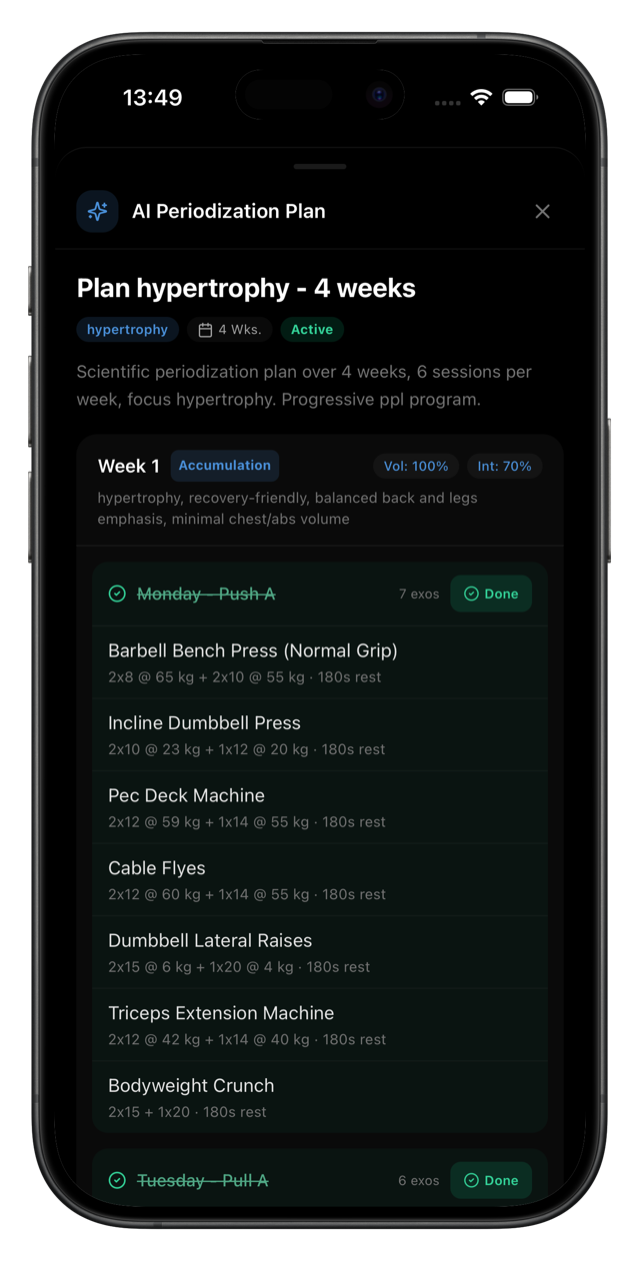
Tools like AIVancePro, with its conversational AI coach available on iOS, help you calibrate workout intensity based on your recovery state, so you keep making progress without crossing into overtraining territory.
FAQ
Does extreme muscle soreness mean I had a great workout?
Not necessarily. Severe DOMS usually signals an unusual stimulus, a new exercise, too much volume too fast. Experienced athletes often train effectively with minimal soreness. Workout quality is measured by long-term progressive overload, not next-day pain levels.
Can I work out when I’m sore?
Generally yes, if soreness is mild to moderate (2-4 out of 10). Training different muscle groups is perfectly fine. For severe soreness (6+/10), opt for active recovery instead, light movement, mobility work, or a complete rest day.
Why is soreness worse in the morning?
During sleep, you’re lying still for hours with reduced circulation. Inflammatory fluids pool in the affected tissue, and muscles cool down. The first few minutes after waking feel rough, but gentle movement quickly improves blood flow and reduces stiffness.
Will I always get sore from the same exercises?
Over time, less and less. The repeated bout effect means your body adapts to familiar stimuli, generating progressively less DOMS from the same workout. Introduce a new exercise or significantly ramp up intensity, however, and soreness can return.
Should I eat more when I’m sore?
Focus on quality, not necessarily quantity. Prioritize adequate protein (1.6-2.2g/kg/day). A slight caloric surplus supports recovery, especially during muscle-building phases. But dramatically increasing total calories just because you’re sore isn’t necessary.
← Back to blog