
Training on an empty stomach has its passionate advocates and equally vocal critics. Some gym-goers swear by fasted morning sessions for accelerated fat loss. Others refuse to touch a barbell without fuel in their system. The science, and the practical reality, sits firmly in between. This guide breaks down the real benefits and drawbacks of fasted workouts so you can make an informed decision.
Disclaimer: This article is for informational purposes only. Consult a healthcare professional before making significant changes to your exercise or nutrition habits.
- What is a fasted workout?
- The real benefits of training fasted
- The drawbacks you can’t ignore
- What the research actually shows
- Who should (and shouldn’t) train fasted
- How to optimize your fasted sessions
- Syncing your training with your nutrition strategy
- FAQ
What Is a Fasted Workout?
A fasted workout is a training session performed after an extended period without caloric intake, typically 8 to 12 hours or more. In practice, this almost always means early morning sessions before breakfast.
The rationale is metabolic: after an overnight fast, insulin levels are low, glucagon is elevated, and the hormonal environment favors fat mobilization. Noradrenaline released during exercise amplifies this effect, further stimulating lipolysis, the breakdown of stored fat into usable energy.
Fasted training is not a new concept, bodybuilders in the 1980s used morning cardio before eating as a standard cutting tool. Its mainstream popularity surged with the widespread adoption of intermittent fasting protocols like 16:8, for which fasted training is a natural fit.
The Real Benefits of Training Fasted
1. Higher fat oxidation during exercise
This is the most well-documented advantage. With lower blood glucose and glycogen availability, the body increases reliance on fat oxidation for fuel. Multiple studies confirm significantly higher lipid oxidation rates during fasted exercise compared to fed-state exercise at the same intensity.
2. Improved insulin sensitivity
Regular fasted training can enhance the insulin sensitivity of muscle cells over time, a meaningful benefit for body composition, carbohydrate metabolism, and long-term metabolic health.
3. No meal timing logistics
No need to plan a pre-workout meal, wait 90 minutes for digestion, or wake up earlier just to eat. You get up and train. For morning exercisers with packed schedules, this simplicity alone makes fasted training the most practical option.
4. Mental clarity reported by many practitioners
A significant subset of athletes describe heightened focus and mental clarity during fasted sessions. This subjective experience likely reflects reduced digestive load and the stimulating effects of noradrenaline on the central nervous system.
5. Natural fit for intermittent fasting
If you follow a 16:8 or similar protocol, placing your workout at the tail end of your fasting window is the most coherent scheduling approach. You get the metabolic benefits of the fast and can immediately leverage the post-workout meal for recovery.
6. Autophagy enhancement
Autophagy, the cellular process of clearing damaged components, is upregulated during fasting. Exercise combined with fasting can further stimulate this process, with potential benefits for cellular longevity and metabolic disease prevention.
The Drawbacks You Can’t Ignore
1. Risk of muscle catabolism
This is the primary argument against fasted strength training. When glycogen is depleted and intensity is high, the body can turn to muscle amino acids for glucose production via gluconeogenesis. This is real, but its magnitude is routinely exaggerated online. For sessions under 60 minutes at moderate intensity, catabolism remains marginal for most trained individuals.
2. Reduced performance on high-intensity efforts
The research is clear: high-intensity exercise performance, heavy compound lifts, explosive movements, sprint intervals, suffers when training fasted. If your goal is to hit strength PRs or push maximum output, insufficient glucose availability will work against you.
3. Reactive hypoglycemia risk
Some individuals experience dizziness, nausea, shakiness, or sudden fatigue during fasted exercise, classic signs of a blood sugar drop. This is more common in people with unstable glycemic regulation or those new to fasted training. It’s a signal that should not be pushed through.
4. Session quality takes a hit for high-volume work
Light sessions (moderate cardio, core work, light hypertrophy) generally hold up fine. But a high-volume squat session with 5 sets of heavy back squats and short rest periods will likely underperform without available glycogen.
5. Slower recovery if post-workout nutrition is delayed
Post-exercise anabolism depends on rapid nutrient availability. A fasted session followed by a delayed meal (2+ hours) slows glycogen resynthesis and muscle protein synthesis, which can compound fatigue across multiple weekly sessions.
What the Research Actually Shows
The scientific picture on fasted strength training is nuanced:
- On fat loss: the intra-workout fat oxidation advantage is real, but 24-hour comparisons show the difference largely disappears when total caloric intake is matched (energy balance remains the dominant variable).
- On muscle mass: BCAA supplementation (5-10g) before fasted sessions significantly reduces catabolism without meaningfully disrupting the metabolic benefits of fasting, this is the most evidence-backed compromise.
- On performance: the negative impact is proportional to intensity. Low-to-moderate intensity exercise is relatively unaffected; high-intensity output (above 75-80% of max effort) shows consistent performance decrements.
The reasonable scientific takeaway: fasted training is neither a game-changer nor a waste of time. Its value depends on your goal, your metabolic profile, and the nature of your session.
Who Should (and Shouldn’t) Train Fasted
Good candidates for fasted training:
- Intermediate trainees focused on fat loss while preserving muscle
- Intermittent fasting practitioners on 16:8 or similar protocols
- Low-to-moderate intensity sessions (cardio, core, light hypertrophy)
- People who struggle with morning digestion and feel better training light
Poor candidates for fasted training:
- Beginners (priority is technique and movement quality, not metabolic optimization)
- Strength or muscle-building phases requiring maximum performance
- Athletes with high-intensity or high-volume sessions
- People prone to hypoglycemia or with a history of disordered eating
How to Optimize Your Fasted Sessions
Take BCAAs or leucine before training. 5-10g of BCAAs or 3g of pure leucine is sufficient to blunt catabolism without significantly impacting the fasted metabolic state. This is the most practical and evidence-supported compromise.
Hydrate properly. Dehydration compounds every limitation of fasted training. 500ml of water with a pinch of salt before your session is a solid starting point.
Match session type to fasted state. Save fasted sessions for moderate hypertrophy work or cardio. Keep your max-effort strength days for times when you have fuel on board.
Eat within 30-60 minutes post-session. The post-fasted-workout window is critical. A meal with 30-40g of protein and quality carbohydrates accelerates recovery and flips the metabolic switch from catabolism to anabolism.
Allow 2-4 weeks for adaptation. The first few fasted sessions are typically the hardest. Your body adapts its fat-burning machinery over time. If performance doesn’t recover after a month, the approach may not suit your physiology.
Black coffee is fine. Caffeine has a negligible insulin impact and can actually improve fasted performance by mobilizing free fatty acids. It’s a near-universal practice among fasted trainees for good reason.
Syncing Your Training with Your Nutrition Strategy
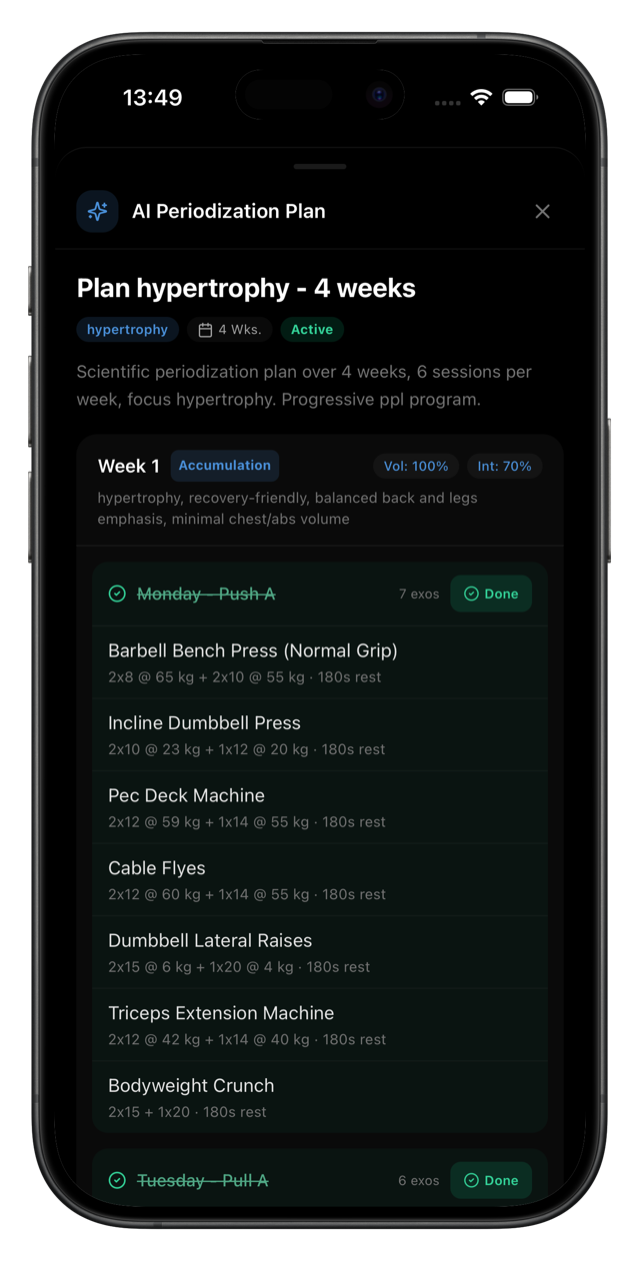
One of the real challenges of fasted training is adapting your program to your actual energy and recovery signals week over week. AIVancePro’s built-in AI coach can help you adjust your sessions based on your energy levels, eating window, and body composition goals, so you’re not guessing whether a fasted squat day is the right call. Available on iOS, with a first Pro month at €3.49.
Conclusion
Fasted workouts offer genuine benefits, enhanced fat mobilization, simplified morning logistics, natural synergy with intermittent fasting, alongside real limitations around performance and catabolism risk. The right approach is to tailor fasted training to your specific goals and session type, not apply it as a blanket rule.
If you want to dial in a training program that accounts for your actual nutrition habits and energy patterns, an AI-powered coach that adapts to your context beats generic programming every time.
Always consult a healthcare professional or sports dietitian before making significant changes to your training or nutrition routine.
FAQ
Does fasted training actually burn more fat?
During the session, yes, fat oxidation is measurably higher. Over a full 24-hour period, the advantage fades when total caloric intake is identical. It’s a useful tool in the right context, not a shortcut to leanness on its own.
Will I lose muscle training on an empty stomach?
The risk exists but is frequently overstated. For sessions under 60 minutes with adequate daily protein intake (1.6-2.2g per kg of bodyweight), muscle loss remains marginal for most trained individuals.
Can I take protein powder before a fasted workout?
Protein powder breaks the fast metabolically (it triggers an insulin response). If your goal is strictly metabolic fasting benefits, avoid it. If you’re prioritizing muscle retention, BCAAs are a better compromise, lower insulin impact, direct anti-catabolic effect.
How long can I train fasted safely?
Ideal duration is under 60 minutes to limit catabolism and hypoglycemia risk. Beyond that point, the risks increase while the metabolic benefits plateau.
Is fasted training compatible with muscle building?
It can work for body recomposition (losing fat while maintaining muscle), but true muscle-building phases require a caloric surplus and maximized nutrient availability around training, both of which are harder to achieve in a fasted state.
← Back to blog