You want to know how to cut fast without losing muscle? Cutting is the phase where you drop body fat to reveal the muscle underneath. Most Instagram coaches sell it as eating broccoli and running for an hour, that’s not how it actually works.
This guide gives you the real protocol: caloric deficit, protein, training, cardio, sleep. No magic method, just the levers that work, backed by science and used by athletes who consistently get shredded.
Set the Right Caloric Deficit
To lose fat, you need a caloric deficit. No deficit, no cut, period. The trap? Most lifters cut too aggressively, too fast, and end up burning muscle instead of fat.
Simple rule: 20-25% below maintenance. Not 50%. If you maintain weight at 2,800 kcal, target 2,100-2,250 kcal during the cut.
To calculate maintenance:
- Weigh yourself daily for 7 days, same conditions
- Track all calories with MyFitnessPal or similar
- Stable weight = maintenance
- Gaining? Drop calories. Losing? Add some
A fast cut should run 8-12 weeks max. Beyond that, your metabolism adapts and progress stalls. Better to alternate short cuts and maintenance phases than drag a 6-month diet that wrecks your hormones and your motivation.
Common mistake: dropping straight to 1,200 kcal. The result? Strength loss, chronic fatigue, muscle wasting, and a rapid rebound when you stop dieting. The lower you go, the more violent the rebound.
Keep Protein Intake High
During a cut, protein becomes your best ally. It preserves lean mass and boosts satiety, two critical advantages when you’re eating less.
Target: 1 to 1.1 g of protein per pound of bodyweight (2-2.4 g/kg).
For a 180 lb (80 kg) lifter, that’s 180-220 g of protein daily. Spread across 4-5 meals to maximize protein synthesis.
Top sources:
- Whole eggs
- Chicken, turkey
- White fish, salmon
- Lean beef
- Greek yogurt, cottage cheese
- Whey as a top-up
Carbs aren’t the enemy. Keep them around training (pre/post) to maintain performance. 1.5-2 g per pound at the start of the cut, drop to 1-1.5 g if weight loss stalls.
Fats? Minimum 0.4 g/lb (0.8 g/kg) for hormone production. Never go below, this is what tanks testosterone in aggressive cuts.
Structure Training to Preserve Muscle
This is the golden rule when figuring out how to cut fast without losing muscle: send a clear signal to your body that it needs to keep that muscle. Otherwise it’ll burn it for energy savings.
Keep the same loads as in your bulk. If you squat 265 lb, you keep squatting 265 lb during the cut. Drop the weights and your body assumes that muscle is no longer useful.
Recommended volume:
- 4-5 sessions per week
- 12-18 working sets per muscle group per week
- Compounds first: squat, deadlift, bench, pull-ups, rows
- 3-5 reps on heavy lifts, 8-12 on isolation
Split programs (push/pull/legs or upper/lower) work great in a cut. Avoid exhausting full-body splits, your recovery capacity drops with the deficit.
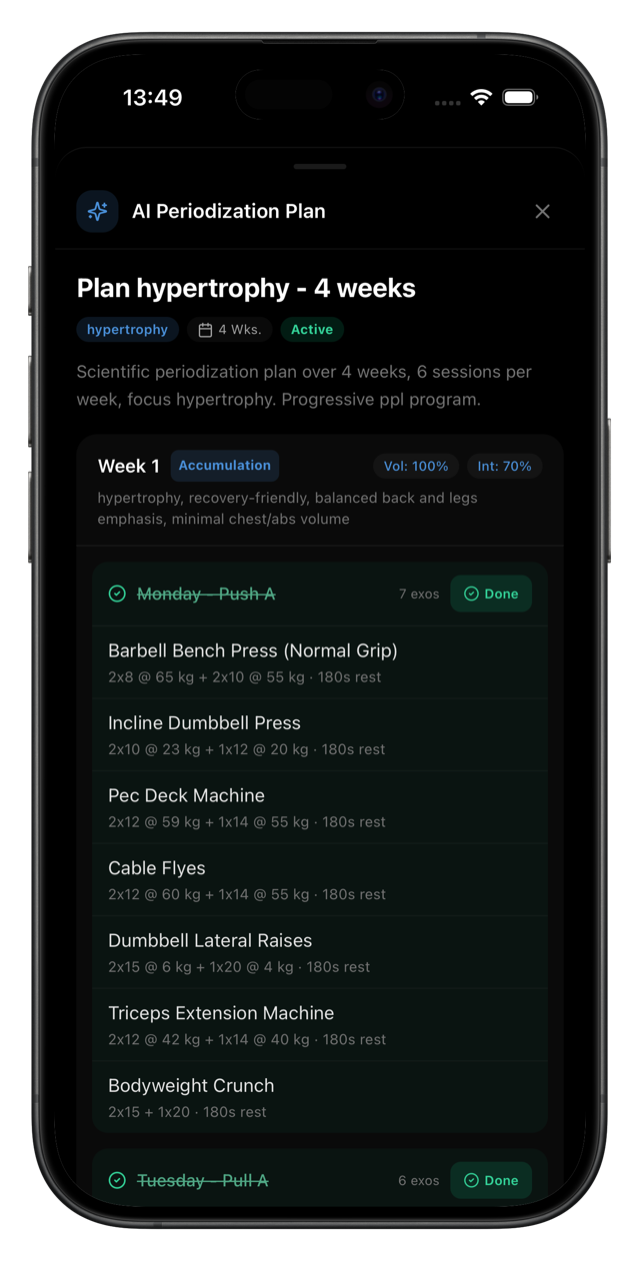
The AIVancePro app automatically adjusts volume and intensity based on your phase (cutting or bulking), with a built-in conversational AI coach that catches signs of overtraining before they wreck your week.
Use Cardio Strategically
Cardio accelerates the deficit, but used to excess it becomes catabolic. The rule: less is more.
Working strategy:
- 2-3 LISS sessions of 30-40 min per week (brisk walk, easy bike)
- 1-2 HIIT sessions of 15-20 min per week (sprints, bike intervals)
- No fasted cardio in the morning if it kills your evening lifting session
Fasted cardio isn’t magic. Studies show that with equal caloric intake, fat loss is identical fed or fasted. Pick what helps you recover and perform.
Daily steps: 8,000 to 10,000 per day. Most underrated lever for boosting energy expenditure without wrecking recovery. A 20-minute walk after dinner also improves insulin sensitivity.
Manage Sleep and Stress
You can have the best nutrition plan in the world, if you sleep 5 hours a night, your cut stalls. Sleep regulates leptin (satiety) and ghrelin (hunger). Less sleep, more cravings.
Target: 7-9 hours per night.
Sleep routine:
- No screens 30 min before bed
- Bedroom at 65-67°F (18-19°C)
- Fixed bedtime (max 30 min variation)
- No caffeine after 2 PM
- Light meal 2-3 hours before bed
Chronic stress elevates cortisol, which promotes belly fat storage and blocks fat loss. Add 10 minutes of walking after each meal, and a short mobility or breathing session in the evening.
Useful Supplements vs. Marketing Scams
Supplements are 5% of the result. Use them only after dialing in the other 95%: nutrition, training, sleep.
Actually useful:
- Whey or casein if you can’t hit protein from food
- Creatine monohydrate (3-5 g/day), only proven molecule for strength
- Vitamin D3 if deficient
- Omega 3 (2-3 g/day) for anti-inflammatory effects
- Caffeine 30 min pre-workout
Common scams:
- Fat burners (placebo at best)
- BCAAs (useless if you eat enough protein)
- Detox/cleanse (your liver does the job)
- Slimming teas (diuretic only)
The supplement industry survives on shortcuts that don’t exist. Spend your money on quality food before powders.
Common Mistakes That Kill a Fast Cut
Here are the traps that ruin 80% of cuts I see:
- Too much cardio, not enough lifting → you end up skinny-fat, not lean and muscular
- Uncontrolled weekly cheat meals → 3,000 kcal in one meal can wipe out the week’s deficit
- Cutting carbs to zero → performance crashes, cut stalls
- Obsessive daily weighing → weight fluctuates ±4 lb daily based on hydration, sodium, glycogen
- Eyeballing portions → most people underestimate intake by 30%
- Slashing sodium → cramps, performance drops
- Cut that drags too long → metabolic adaptations and guaranteed plateau
Cutting fast isn’t about maximum suffering. It’s about precision and consistency over 8-12 weeks.
Conclusion
Cutting fast without losing muscle is dialed in: moderate deficit (20-25%), high protein (2-2.4 g/kg), same training volume with same loads, moderate cardio, 7-9 hours of sleep. No magic product, just discipline.
If you want a program that auto-adjusts to your cutting phase, scales volume to your recovery, and keeps you on your macros, AIVancePro covers it with a built-in conversational AI coach, available on iOS, first month at €3.49.
⚠️ This article is for educational purposes and doesn’t replace advice from a doctor or registered dietitian. Before any significant nutrition change, consult a healthcare professional, especially if you have a medical history or take medication.
FAQ
How long does it take to cut fast?
An effective cut runs 8 to 12 weeks. Expecting to lose 20 lb of fat in 4 weeks is unrealistic without major muscle loss.
How many calories should I cut to lean out?
Aim for a 20-25% deficit below maintenance. For most adult men, that’s 500-700 kcal less per day.
Should I do fasted cardio for faster fat loss?
No. With equal caloric intake, fat loss is identical. Pick what preserves your lifting sessions.
Can I gain muscle while cutting?
Possible for beginners or returning lifters. For advanced trainees, the goal is to preserve muscle, not add it.
Should I cut all carbs?
No. Cut them moderately but keep some around training for performance. 2-4 g/kg depending on the phase.
How often should I weigh myself?
Once a week, morning, fasted, same conditions. Daily weighing creates unnecessary stress.
← Back to blog