
Starting weights — where do you begin ?
Just starting out, or coming back after a break ? We give you a cautious baseline of loads, calculated from your bodyweight. The point isn't to lift heavy right away — it's to start safe and add weight as soon as it's clean.
Loads kept deliberately cautious : it's a starting point, not a limit.
Start HERE, add 2.5 kg as soon as you hit all your reps cleanly.
Or just ask Vance
The calculator starts from your bodyweight. Vance follows your progress, session after session.
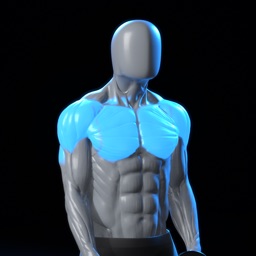
What weight should you start with ?
Early on, the limit isn't your muscles — it's coordination. Your body is learning the movement, recruiting the right muscles, protecting the joints. Load up too soon and you learn a bad pattern under tension : you get hurt, or you plateau fast.
The good news : as a beginner, progress is very fast. You can add weight almost every week for the first few months. You don't need to start heavy to progress fast — it's far better to start too light than to end up injured. A cautious starting load is time gained, not time lost.
The golden rule : progressive overload
The only real engine of progress is asking a little more of your body, regularly. In practice :
- Hit all your reps cleanly across your 3 sets ? +2.5 kg next session.
- No plates for 2.5 kg ? +1 rep per set until you reach the top of the range, then bump the weight.
- An ugly rep or a missed rep ? Stay on the same load for one more session. No shame in it : we build, we don't break.
No faster than that. The urge to add 10 kg because one session felt easy always ends in an injury or a plateau. That's exactly what Vance, the coach that sees your loads, handles for you : it looks at your real sessions and tells you what to load, without guessing and without rushing.
Getting back after a break: what weight ?
After a break, you don't start from scratch. Your muscles "remember" and come back far faster than they were built — that's muscle memory. The real risk on a comeback isn't the muscle, it's your tendons and nervous system, which readapt more slowly.
Hence the ramp : you restart at 50-60 % of your old loads on longer sets (12-15 reps), build back up gradually over 2-3 weeks, and return to your level without getting hurt. Enter your old working weight above to see your ramp in figures.
Frequently asked questions
What weight should you start with?
Start light — really light. A good starting load for a true beginner sits around 0.45 × your bodyweight on the squat, 0.35 × on the bench press, 0.55 × on the deadlift. You should finish your sets of 8-12 reps with 2-3 reps left in the tank. If it feels easy, that's normal: you learn the movement before you chase heavy weight.
How much should you add each session?
The golden rule: +2.5 kg (the smallest plate per side, i.e. 1.25 kg each) as soon as you hit all your reps cleanly, or +1 rep if you don't have the plates for 2.5 kg. No faster. Beginner progress is fast — no need to force it. Technique first, the weight follows.
Getting back after a break: what weight should I restart with?
Restart at 50-60% of your old working weights, for 12-15 reps, over 2 weeks. Your body relearns fast what it once knew (muscle memory), but your tendons and nervous system need a few sessions to catch up. Then ramp up gradually: you'll get your old loads back far faster than you built them the first time.
How long to get back to my old level after a break?
Thanks to muscle memory, much faster than the first time around — often a few weeks to a few months depending on how long you stopped. The 2-3 week ramp is mainly there to protect tendons and joints, not the muscle itself, which comes back quickly. Don't skip this step: it's what prevents the classic comeback injury.
How many sets and reps as a beginner?
3 sets of 8 to 12 reps per exercise is the sweet spot to learn technique while building muscle. Rest 1.5 to 2 minutes between sets. Focus on slow, controlled reps rather than the number on the bar — that's what pays off early on.
Which exercises should a beginner pick?
The big compound lifts: squat, bench press, deadlift, overhead press, row, pull-ups (or lat pulldown). They train a lot of muscle at once, teach you to coordinate your body, and drive fast progress. Keep isolation work (curls, extensions) as a supplement, not the centre of your early training.
Are these starting loads an absolute truth?
No — and that matters. They're deliberately cautious starting points, calculated from your bodyweight. Your real level depends on your build, your athletic history, and the lift itself. Treat them as a safe baseline: you start here, adjust from the very first session, and add weight over the weeks.
Am I lifting enough?
The classic beginner doubt. Three simple signs your load is right: (1) your last 2-3 reps are genuinely hard (but your technique holds), (2) you CAN'T do 3-4 more reps than planned, (3) you're progressing — you add weight or reps every 1 to 2 weeks. If you finish your sets easily with 5 reps in reserve, it's too light: add 2.5 kg. If you miss reps or your form breaks down, it's too heavy: drop back. The right load sits between the two.