You train hard, eat clean, but your gains have stalled? Sleep and muscle recovery work together as one system that most lifters underestimate. Without quality sleep in adequate quantity, your training sessions never fully turn into muscle.
Why sleep is your most powerful recovery tool
Strength training creates micro-tears in your muscle fibers. Growth doesn’t happen during your workout, it happens while you sleep. Through the night, your body repairs damaged tissue, synthesizes new proteins, restores your central nervous system and regulates the hormones that drive your gains.
A 2011 study published in Sleep showed that limiting sleep to 5 hours per night for one week dropped testosterone levels by 10-15 % in healthy young men. In real-world terms: less strength, slower recovery between sessions, and a measurable loss of lean mass. Skip sleep, and you sabotage every hour you spent in the gym.
Sleep stages and how they impact muscle growth
Sleep cycles run roughly 90 minutes, alternating between light sleep, deep sleep and REM. For lifters, two stages matter most.
Deep sleep (stage N3) is the king of physical recovery. Your pituitary gland releases its largest pulses of growth hormone (GH) during these phases, driving tissue repair and protein synthesis. You spend roughly 15-25 % of your night in deep sleep, mostly during the early cycles, meaning before 3 a.m. if you go to bed at midnight.
REM sleep handles nervous system recovery and consolidates motor learning. If you’re working technical lifts (squat, snatch, clean, deadlift), this is the stage that locks the movement patterns into your brain. Cut a night short and you sacrifice weeks of technical work.
How many hours should you sleep for optimal recovery
The National Sleep Foundation recommends 7-9 hours per night for adults. As a lifter, aim for the higher end. Sports science research suggests athletes with high training loads benefit from 8-10 hours daily, sometimes split with an afternoon nap.
Watch out for sleep debt. Sleeping 5 hours Monday through Friday and 12 hours on Saturday doesn’t make up for it. Cumulative deficits during the week impair performance, insulin sensitivity, and your ability to use fat as fuel for weeks afterward.
If you’re not sure where you stand, track your resting heart rate over a few weeks. A morning heart rate that climbs without any change in training is often the first sign of a recovery deficit linked to sleep.
Hormones, sleep and lifting: GH and testosterone
Three hormones drive your progress, and all depend heavily on sleep.
Growth hormone (GH) is released mainly during the first hours of deep sleep. It triggers protein synthesis, fat breakdown and tendon regeneration. Cutting your night short blunts this peak and you lose a chunk of the anabolic benefit you earned that day.
Testosterone peaks between 4 a.m. and 8 a.m. You need a complete sleep cycle to capture that surge. Going to bed at 2 a.m. means missing half of the hormonal production that helps you build muscle and maintain libido.
Cortisol, on the other hand, climbs when you sleep poorly. This catabolic hormone breaks down muscle, promotes belly fat storage and slows recovery. Keeping cortisol low is just as important as keeping testosterone high, and sleep is your number one lever.
What poor sleep does to your performance
A single sleepless night can drop your strength by 5-10 % the next day, according to several sports science studies. On heavy compound lifts (deadlift, squat, bench press), the drop is even steeper because your central nervous system takes a direct hit.
Chronic sleep loss has sneakier effects. You become more impulsive with food choices, you crave sugar, you eat 200-400 extra calories per day without noticing. This drift will tank your cut or amplify fat gain during a bulk.
You also lose motivation. The dopamine system is regulated by sleep and chronic deficit makes you less capable of pushing hard at training. It’s a vicious cycle: you sleep badly, you push less, you stop progressing, motivation drops further.
How to optimize your sleep for better recovery
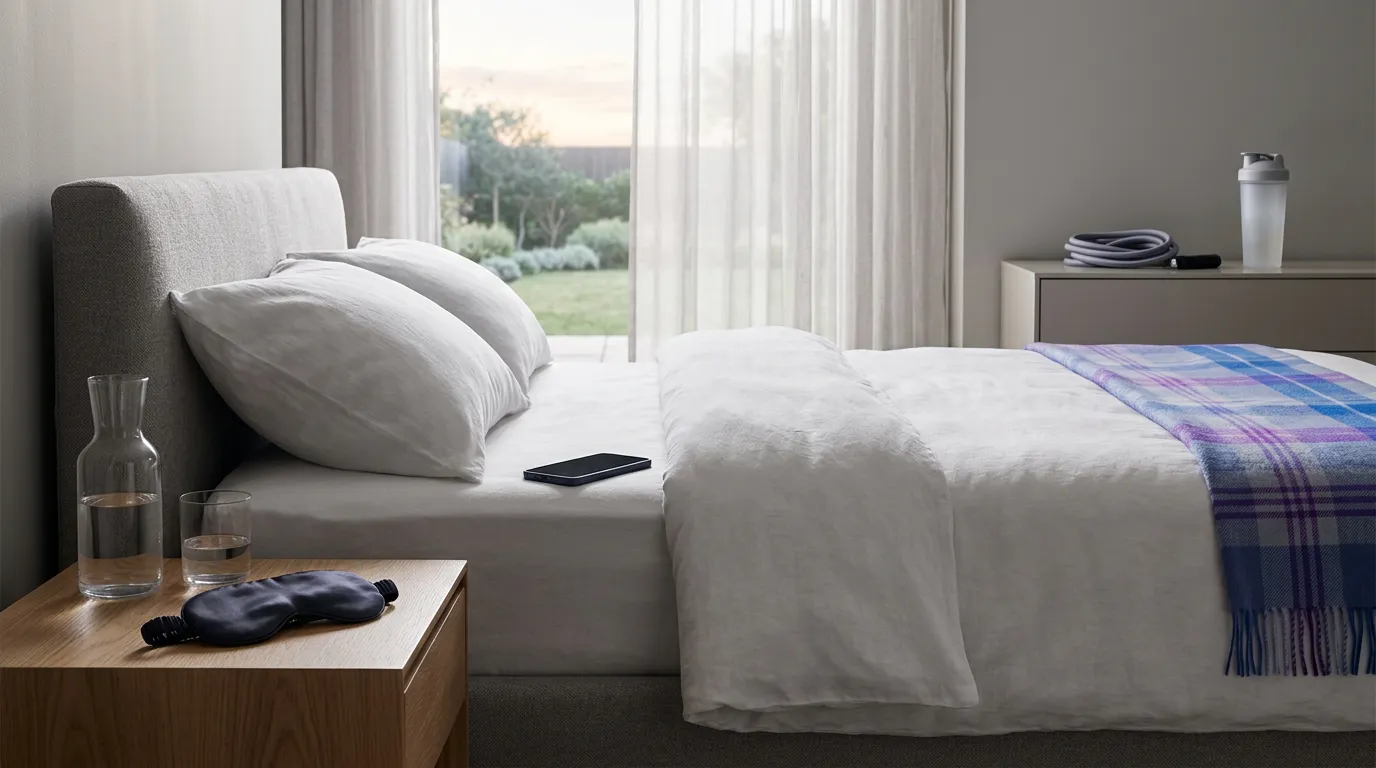
First rule: a consistent bedtime. Your circadian clock runs on a 24-hour cycle and loves routine. Go to bed and wake up at the same time, weekends included, and sleep quality will climb within weeks.
Second rule: cool the room. The optimal temperature sits around 18°C (65°F). Higher than that and you produce less melatonin and your deep sleep cycles get shorter.
Third rule: kill the screens 60 minutes before bed. Blue light suppresses melatonin and delays sleep onset. If you really can’t, enable a warm-light filter on your phone.
Fourth rule: caffeine has a half-life of 5-6 hours. A 4 p.m. coffee still leaves 50 % of the dose in your bloodstream at 10 p.m. Cut caffeine 8 hours before bedtime for best results.
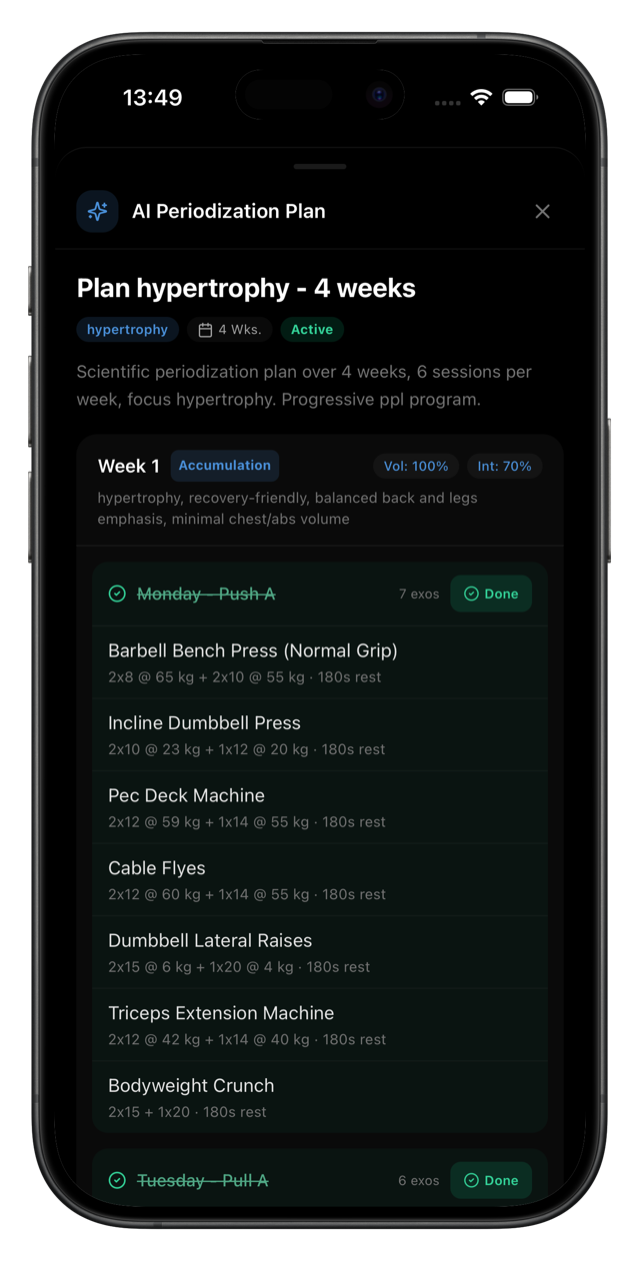
To track your recovery and adjust your programming automatically, AIVancePro features a built-in conversational AI Coach that scales session intensity based on your feedback and history. It prevents you from pushing on days when poor sleep has drained you.
Sleep routines used by top athletes
Pro athletes follow strict routines. LeBron James sleeps 12 hours a night during the season. Roger Federer claims 11-12. Those numbers aren’t celebrity quirks, they’re a recovery strategy that lets them stack competitions without breaking down.
An effective pre-bed routine includes a warm shower 90 minutes before, dim lighting, paper reading or light stretching. Avoid late high-intensity sessions after 9 p.m.: the adrenaline release and rise in body temperature delay sleep onset.
If you train in the morning, keep your wake time fixed and adjust bedtime accordingly. Lifters who get up at 5 a.m. should be in bed by 9 p.m. Non-negotiable. Many try to manage on 6 hours of sleep and end up overtrained after a few months.
Watch your pre-bed nutrition too. A meal rich in slow-digesting protein (casein, cottage cheese, eggs) before sleep supports overnight protein synthesis. Avoid fast carbs that fluctuate blood sugar through the night and fragment your sleep.
Conclusion
Sleep and muscle recovery form a closed loop. Without quality sleep in adequate quantity, the work you do in the gym never converts fully into muscle. Before chasing the perfect program or the next miracle supplement, fix your nights. It’s the highest-leverage move in your entire training plan.
If you want to track recovery from session to session and adapt your program to your real state, AIVancePro offers a built-in conversational AI Coach that adjusts loads and volume based on how you actually feel. Available on iOS, first month at €3.49.
Health disclaimer: this article is for informational purposes only. If you experience persistent or unusual sleep disorders, consult a physician or sleep specialist before making lasting changes to your habits or training.
FAQ
How many hours of sleep do I need as a lifter?
Aim for 8-9 hours per night. Lifters with high training loads can benefit from 9-10 hours, including a nap.
Can a nap make up for poor nighttime sleep?
Partially. A 20-30 minute early-afternoon nap improves alertness, but it doesn’t replace the deep sleep and REM you get from full nighttime cycles.
Should I train after a bad night of sleep?
Yes, but lower the intensity. Choose a light technical session or moderate cardio rather than heavy strength work that taxes your nervous system.
Is deep sleep more important than REM for lifting?
For pure physical recovery, yes: deep sleep is when your body releases the most growth hormone. But REM remains essential for consolidating motor patterns.
Which supplements help sleep and recovery?
Magnesium bisglycinate, low-dose melatonin and ZMA are the most studied. Talk to a healthcare professional before starting any supplement.
← Back to blog