Creatine is the most researched supplement in strength training, and one of the most misunderstood. Fear of creatine side effects keeps many lifters from ever trying it. Here’s what the science actually says, without the noise.
How Creatine Works in Your Muscles
Creatine is a naturally occurring compound your body synthesizes from three amino acids: arginine, glycine, and methionine. Your body produces around 1-2g per day, and you also get it from protein-rich foods like red meat and fish.
In the context of strength training, creatine’s primary role is to regenerate ATP (adenosine triphosphate), the energy currency your muscle cells burn during high-intensity efforts. More creatine phosphate stored in your muscles means more power available during heavy working sets or sprint intervals.
Creatine monohydrate is the most studied form. After 30+ years of research and hundreds of clinical trials, its effectiveness is beyond any serious scientific doubt. But what about the side effects?
The Actual Side Effects of Creatine
The good news: creatine is one of the best-tolerated sports supplements that exists. Reported adverse effects are rare and mostly tied to incorrect usage.
Intramuscular water retention
This is the most well-known effect, and the most consistently misunderstood. Creatine draws water into your muscle cells, not under your skin. You may gain 1-2 kg quickly in the first weeks; this is water weight inside the muscles, not fat. This mechanism actually contributes to greater muscle volume and improved performance.
Digestive discomfort (uncommon)
Some lifters experience stomach cramps, nausea, or diarrhea, almost always during loading phases of 20g/day. The fix is simple: skip the loading phase entirely and take 3-5g/day from day one. Your muscles will reach full saturation within 3-4 weeks without the GI stress.
Muscle cramps (a myth)
One of the most persistent myths in fitness. Multiple high-quality studies have found zero link between creatine supplementation and increased cramping. A 2021 review in the Journal of the International Society of Sports Nutrition explicitly concluded that creatine does not increase cramp risk or injury rates in any population studied.
What Creatine Does NOT Do
Let’s clear the air on the most common fears.
Creatine doesn’t damage kidneys in healthy individuals. Long-term studies, up to 5 years of continuous supplementation, show no negative impact on renal function in healthy adults. Creatine does raise serum creatinine levels, which can look alarming on a blood panel without context. But elevated creatinine in a creatine user is not a sign of kidney damage; it’s a predictable biochemical response.
Creatine probably doesn’t cause hair loss in most users. Only one study, on South African rugby players, found an increase in DHT, a hormone associated with male pattern baldness. This study has never been replicated. If you have strong genetic predisposition for hair loss, you can make an informed choice to be cautious. But the widespread panic circulating online vastly outstrips the actual evidence.
Creatine is not a steroid. It doesn’t interact with androgen receptors, doesn’t alter testosterone levels, and doesn’t suppress natural hormone production. Calling creatine a steroid reflects a fundamental misunderstanding of how it works.
Who Should Avoid Creatine
Creatine is generally safe for healthy adults, but certain groups should exercise caution:
- Pre-existing kidney disease: if you’ve been diagnosed with renal insufficiency, consult your doctor before supplementing.
- Pregnancy and breastfeeding: insufficient data in these populations, avoid by precaution.
- Children and adolescents: fewer studies in these age groups; adult recommendations don’t automatically apply.
For healthy adults who train regularly, serious adverse effects are extremely rare, and the scientific consensus is reassuring.
How to Take Creatine With Minimal Side Effects
The simplest and best-tolerated protocol:
- Daily dose: 3-5g of creatine monohydrate per day
- No loading phase needed: muscles reach saturation in 3-4 weeks at a maintenance dose without the digestive downsides of a 20g loading protocol
- Timing: doesn’t matter much, pre-, intra-, or post-workout all produce similar results. Consistency beats perfect timing every time.
- With what: water, a protein shake, or a meal. Combining with carbohydrates may slightly improve muscle uptake.
- Hydration: drink adequate water. Creatine draws water into muscle tissue, so baseline hydration matters.
The Real Benefits for Muscle Building
Beyond the side effect conversation, here’s a clear-eyed summary of what creatine actually delivers:
- Strength: +5-15% gains in maximal strength in controlled studies over 8-12 week periods
- Training volume: more total reps before reaching muscular failure
- Recovery: reduced muscle damage markers and faster recovery between sessions
- Cognitive benefits: documented evidence for improved working memory and mental fatigue resistance
- Lean mass: combined with resistance training and adequate protein intake, creatine consistently produces greater muscle gains over time
Creatine doesn’t replace hard training, it amplifies the results of hard training. That’s the mechanism, and it’s enough to make it the most evidence-backed supplement in strength sports.
Tracking Whether Creatine Is Working
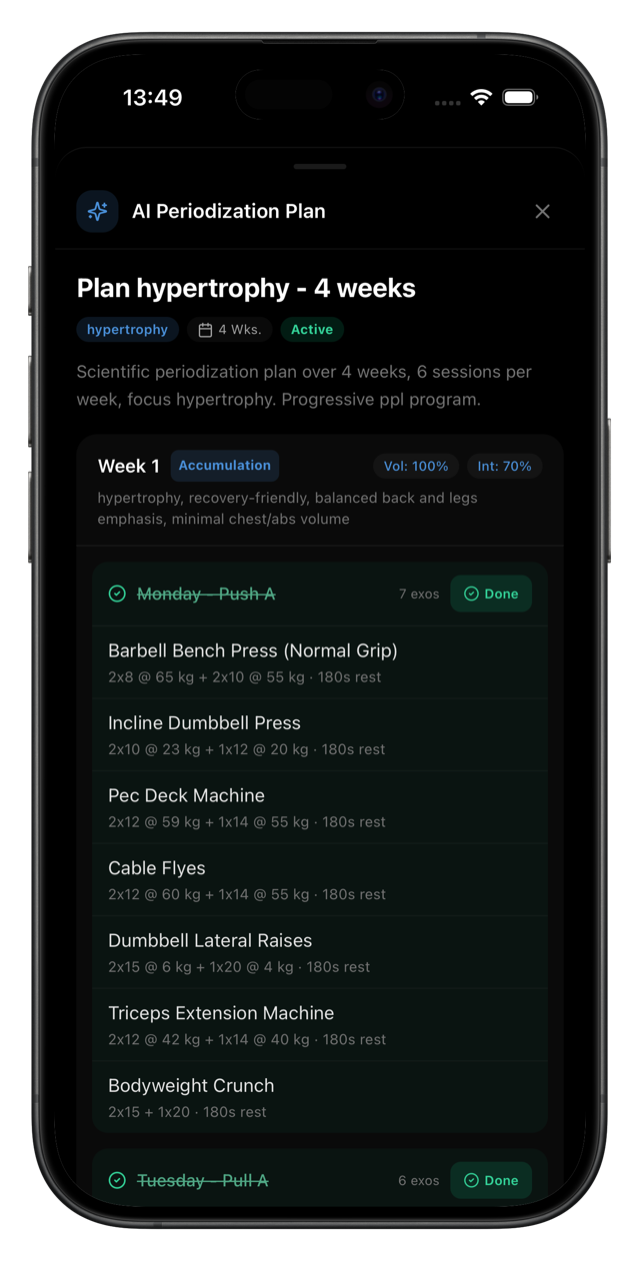
The smartest way to know if creatine is actually impacting your performance is to track your lifts consistently. AIVancePro (available on iOS) lets you log every session and monitor strength progression on your key movements, squat, bench press, deadlift, and rows.
If your 5-rep max on bench press increases by 5kg over 6 weeks at constant training volume, the data tells the story. The AI coach also adapts your programming automatically based on your recovery patterns, so you can train harder without guessing.
Conclusion
Creatine is the most scientifically validated supplement in resistance training. Its side effects are minimal for healthy individuals, and most of the fears circulating online are not supported by the current body of research. Water retention is real but intramuscular and beneficial. Digestive issues are avoidable with correct dosing. Kidneys are not at risk without pre-existing conditions.
If you’re still uncertain, speak with a healthcare professional, but the science, in this case, speaks clearly.
This article is for informational purposes only and does not substitute for medical advice. Consult a healthcare professional before starting any new supplement regimen, especially if you have pre-existing medical conditions.
FAQ
Is creatine safe for your kidneys?
Yes, for healthy individuals. Long-term studies show no negative impact on renal function. Creatine raises serum creatinine, but this does not indicate kidney damage, it’s a predictable biochemical response. If you have pre-existing renal disease, consult your doctor first.
Will creatine make you fat?
No. The 1-2 kg of initial weight gain from creatine is intramuscular water retention, not fat. This water inside your muscle cells actually contributes to better performance and increased muscle volume.
Should you cycle on and off creatine?
There’s no strong scientific evidence requiring creatine cycles. Studies show continuous use over multiple years is safe. The common 8-on/4-off approach is an empirical convention, not a medical requirement.
What’s the best form of creatine?
Creatine monohydrate remains the gold standard. It’s the most studied, most affordable, and most effective form available. “Advanced” variants, ethyl ester, Kre-Alkalyn, buffered creatine, consistently fail to outperform monohydrate in head-to-head trials.
When is the best time to take creatine?
Timing is not critical. Pre-workout, post-workout, or with a meal, all produce comparable results. What matters is daily consistency. Choose a time you’ll actually stick to.
← Back to blog