Yes, you should do cardio while bulking. The evidence-based dose: 2-3 sessions per week, 20 to 40 minutes each, at low to moderate intensity, with one non-negotiable condition: eat back the calories you burn so your surplus stays intact. Programmed that way, the interference with muscle growth is negligible, and skipping cardio entirely can actually hold your progress back.
The old-school answer was a hard no: cardio burns muscle, kills gains, stay away. The research tells a different story.
This guide breaks down what research actually shows, which types of cardio work best during a muscle-building phase, how to find the right frequency, and how to integrate it without compromising your hypertrophy goals.
1. The Myth: Cardio Kills Muscle
This belief comes from a real observation, elite endurance athletes have very little muscle mass. But this confuses cause and effect. Long-distance runners are lean because their sport demands it, not because cardio inherently destroys muscle tissue. The sport selects for leanness; cardio doesn’t create it by default.
The legitimate concern behind the myth is the interference effect: research shows that combining endurance and resistance training can reduce adaptations compared to doing either in isolation. The keyword is “can”, because this effect is primarily observed at high cardio volumes, not at moderate, sensible levels.
2. What Research Actually Shows
The concurrent training literature has grown substantially over the past two decades. Here’s what we know with confidence:
The interference effect is real, but manageable
A landmark meta-analysis by Wilson et al. (2012) in the Journal of Strength and Conditioning Research found that adding cardio to resistance training slightly reduces hypertrophy and strength gains. However, this effect only became significant at high cardio volumes, more than 3-4 sessions per week at moderate to high intensity.
Low-to-moderate cardio volume causes minimal interference
Studies consistently show that 2-3 sessions per week at low-to-moderate intensity (20-40 minutes each) have negligible effects on muscle protein synthesis and hypertrophy, provided caloric intake is maintained.
Cardio can indirectly support muscle growth
Better cardiovascular fitness means:
- Higher training volume before fatigue sets in
- Improved nutrient delivery to muscles through better circulation
- Faster recovery between sets and training sessions
- Lower resting heart rate and better stress tolerance overall
The caloric factor is the real variable
Most interference seen during bulking phases doesn’t come from cardio itself, it comes from inadvertently reducing the caloric surplus through the added energy expenditure. Control calories properly, and most of the problem disappears.
3. Best Types of Cardio for Bulking
Not all cardio is equally compatible with muscle gain. Here’s how the main options stack up:
Low-Intensity Steady-State (LISS)
Examples: brisk walking, easy cycling, light swimming
Why it works during a bulk: minimal glycogen depletion, promotes active recovery, won’t spike cortisol significantly, and carries very low recovery cost. Best used at 30-45 minute sessions, 2-3 times per week, on separate days or after lifting.
Zone 2 Cardio
Examples: jogging or cycling at 65-75% max heart rate, you can still hold a conversation
The sweet spot between effectiveness and recoverability. Zone 2 training builds the aerobic base that makes all your gym work more productive over time. Aim for 25-40 minutes, twice per week.
High-Intensity Interval Training (HIIT)
Examples: 30-second sprints with 90-second rest, cycling intervals
Time-efficient and improves insulin sensitivity (better nutrient partitioning). The downside: significant neuromuscular fatigue that can compromise leg day performance if poorly timed. Limit to 1-2 short sessions (15-20 min) per week, never before heavy lower-body training.
4. Optimal Frequency and Duration
The golden rule: enough to maintain cardiovascular health and body composition benefits, not so much that recovery is compromised.
| Goal | Frequency | Duration | Type |
|---|---|---|---|
| Basic cardio health | 2x/week | 20-30 min | LISS or Zone 2 |
| Active recovery | 2-3x/week | 30-45 min | Low-intensity LISS |
| Body composition | 2x/week | 20-25 min | HIIT or Zone 2 |
Recommended weekly cardio volume during an active bulk:
- Beginner: 60-90 minutes total
- Intermediate: 60-120 minutes
- Advanced: up to 150 minutes with caloric adjustment
Beyond these volumes without caloric adjustment, you risk shrinking the surplus needed for muscle growth.
5. How to Program Cardio Alongside Lifting
This is where most people go wrong. The principles are simple:
Timing within a session
- Best: Lift first, cardio after, strength output is preserved, and post-workout cardio has negligible impact on hypertrophy signals
- Good: Separate sessions at least 6 hours apart
- Avoid: Intense cardio immediately before heavy compound lifts
Timing within the week
- Never schedule intense cardio the day before or after a heavy leg session
- LISS on rest days works well as active recovery
- Save your freshest days for your priority muscle groups
Sample weekly schedule:
- Monday: Upper body strength
- Tuesday: LISS 30 min
- Wednesday: Lower body strength
- Thursday: Rest or very light walking
- Friday: Upper body strength
- Saturday: Zone 2-30 min
- Sunday: Full rest
This structure slots neatly into a 3-day full body workout plan, with low-intensity cardio filling the off days.
Caloric adjustment, non-negotiable
If your bulk targets a +300 kcal surplus and you add two 250-kcal cardio sessions per week, you need to eat an average of +100 kcal/day more to maintain that surplus. Track it. Don’t guess. If you’re not sure where your intake should sit, start from your daily protein target and build the surplus around it.
6. Mistakes to Avoid
Adding cardio without eating more
The single biggest bulk-sabotaging error. Uncompensated energy expenditure, not cardio itself, is what undermines muscle growth.
Doing too much HIIT
Two hard HIIT sessions per week is usually the ceiling during an active bulk. More than that, and you’ll see the consequences in your squat and deadlift numbers.
Cardio before lifting
Pre-workout cardio reduces strength output and power. Always lift first when combining both in the same session.
Using cardio as fat insurance
If you’re doing cardio to “compensate” for dietary slip-ups, you’re disrupting the clean surplus approach. Cardio should serve training goals, not emotional eating patterns.
Replacing rest with “light” cardio
Easy cardio can seem harmless, but if it replaces true rest days, it delays muscle recovery. Some days, complete inactivity is genuinely the best training decision.
Conclusion
The answer to “should you do cardio while bulking” is a clear yes, with the right type, volume, and nutrition strategy in place. Done correctly, cardio makes you a better lifter, improves recovery capacity, and keeps your cardiovascular system healthy through a bulking phase.
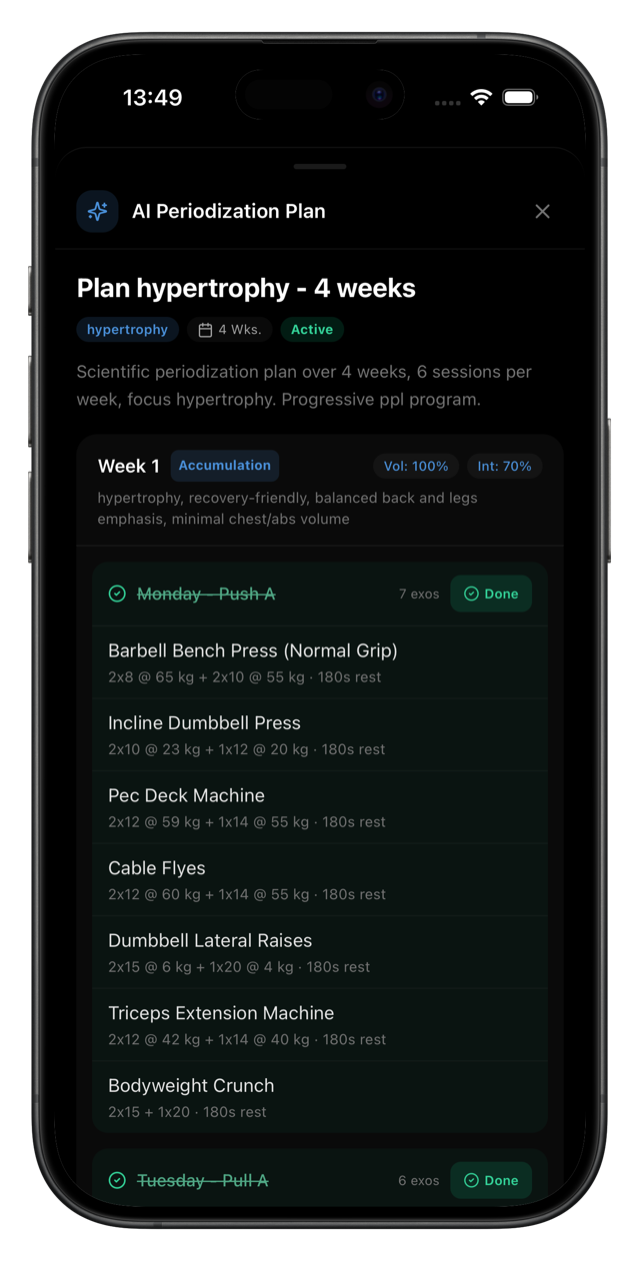
The key variable isn’t cardio volume, it’s whether your program is intelligent enough to account for everything together: lifting, cardio, nutrition, and recovery. That’s the kind of integrated approach AIVancePro is built on, an AI coach that adapts your training in real time based on your goals, availability, and fatigue levels. Available on iOS.
Disclaimer: This article is for informational purposes only. Consult a qualified healthcare professional before making significant changes to your training program if you have any medical conditions or injuries.
FAQ
Does cardio hurt muscle growth when bulking?
At high volumes, yes, the interference effect is well-documented. But 2-3 moderate sessions per week have minimal impact on hypertrophy when calories are properly maintained. The issue is almost always caloric, not purely physiological.
Should I do cardio on rest days when bulking?
Low-intensity cardio on rest days (walking, easy cycling) can enhance recovery by improving blood flow to muscles. Avoid high-intensity cardio on rest days during an active bulk, the recovery cost outweighs the benefit.
How much cardio can I do without losing muscle on a bulk?
Most research supports 60-120 minutes of cardio per week alongside resistance training with minimal hypertrophy interference, provided calorie intake is adjusted upward to compensate for the added expenditure.
Is running bad for muscle gain?
Moderate running (2-3 sessions per week, 20-30 minutes each) doesn’t significantly impair muscle gain. High-frequency long-distance running is more likely to interfere with hypertrophy through both glycogen depletion and elevated cortisol.
What’s the best cardio to do while bulking?
LISS and Zone 2 cardio are the most compatible with a muscle-building phase, they deliver cardiovascular benefits with minimal recovery cost and the least interference with strength and hypertrophy adaptations.
← Back to blog