Building muscle doesn’t have to drain your wallet. A well-structured cheap bulking diet can cover all your nutritional needs for €4-5 per day, and deliver the same results as an expensive meal plan. The key lies in choosing the right staples, not spending more.
How Many Calories Do You Need to Bulk?
A successful bulk starts with knowing your Total Daily Energy Expenditure (TDEE). You need to eat 200-400 kcal above your TDEE to maximize muscle growth while keeping fat gain in check.
Use the Mifflin-St Jeor formula to calculate your TDEE:
- Men: (10 × weight kg) + (6.25 × height cm) − (5 × age) + 5
- Women: (10 × weight kg) + (6.25 × height cm) − (5 × age) − 161
Multiply by your activity level (1.4-1.9). Training 3-4 times per week? Use 1.6.
Example: 75 kg male, 180 cm, 25 years old → TDEE ≈ 2,800 kcal. Bulking target: 3,000-3,200 kcal/day.
Target macro split: 30% protein, 50% carbs, 20% fat. At 3,000 kcal, that’s roughly 225 g protein, 375 g carbs, and 65 g fat. These numbers don’t change based on your budget, only the foods you use to hit them.
The Cheapest High-Protein Foods for Muscle Gain
The foundation of any budget bulk is choosing foods that deliver the most protein and calories per euro spent:
| Food | Avg price | Protein/100g | Calories/100g |
|---|---|---|---|
| Rolled oats | ~€0.80/kg | 13g | 370 kcal |
| White rice | ~€1/kg | 7g | 360 kcal |
| Dry pasta | ~€0.90/kg | 13g | 350 kcal |
| Dry lentils | ~€1.50/kg | 24g | 340 kcal |
| Eggs | ~€0.20/unit | 13g | 155 kcal |
| Frozen chicken breast | ~€5/kg | 31g | 165 kcal |
| Canned tuna | ~€1.20/can | 26g | 130 kcal |
| Low-fat quark | ~€1.20/kg | 12g | 67 kcal |
1 kg of rice + 500 g frozen chicken + 12 eggs = roughly €6 for two full days of solid macros.
Budget-Friendly Protein Sources That Actually Work
For effective muscle gain, target 1.8-2.2 g of protein per kg of body weight daily. At 75 kg, that’s 135-165 g of protein per day.
Whole eggs: The most cost-effective protein source available. At €0.20 per egg and 6 g of complete protein, 4-6 eggs per day is standard for budget bulkers. Buy in packs of 18-30 for the lowest per-unit price.
Frozen chicken breast: The benchmark. Frozen fillets run €4-5/kg with 30 g of protein per 100 g. Buy in multi-kilo bags, portion them immediately, and freeze in daily batches.
Canned tuna: 26 g of protein for ~€1.20. No cooking required, open, drain, mix with pasta or rice. Hard to beat for speed and price.
Low-fat quark or fromage blanc: 11-12 g of protein per 100 g, rich in casein (slow-digesting), ideal before bed to feed muscles overnight.
Lentils and legumes: 20-24 g of protein per 100 g dry weight, and nearly free per gram. Pair with a grain (rice, pasta) to get a complete amino acid profile.
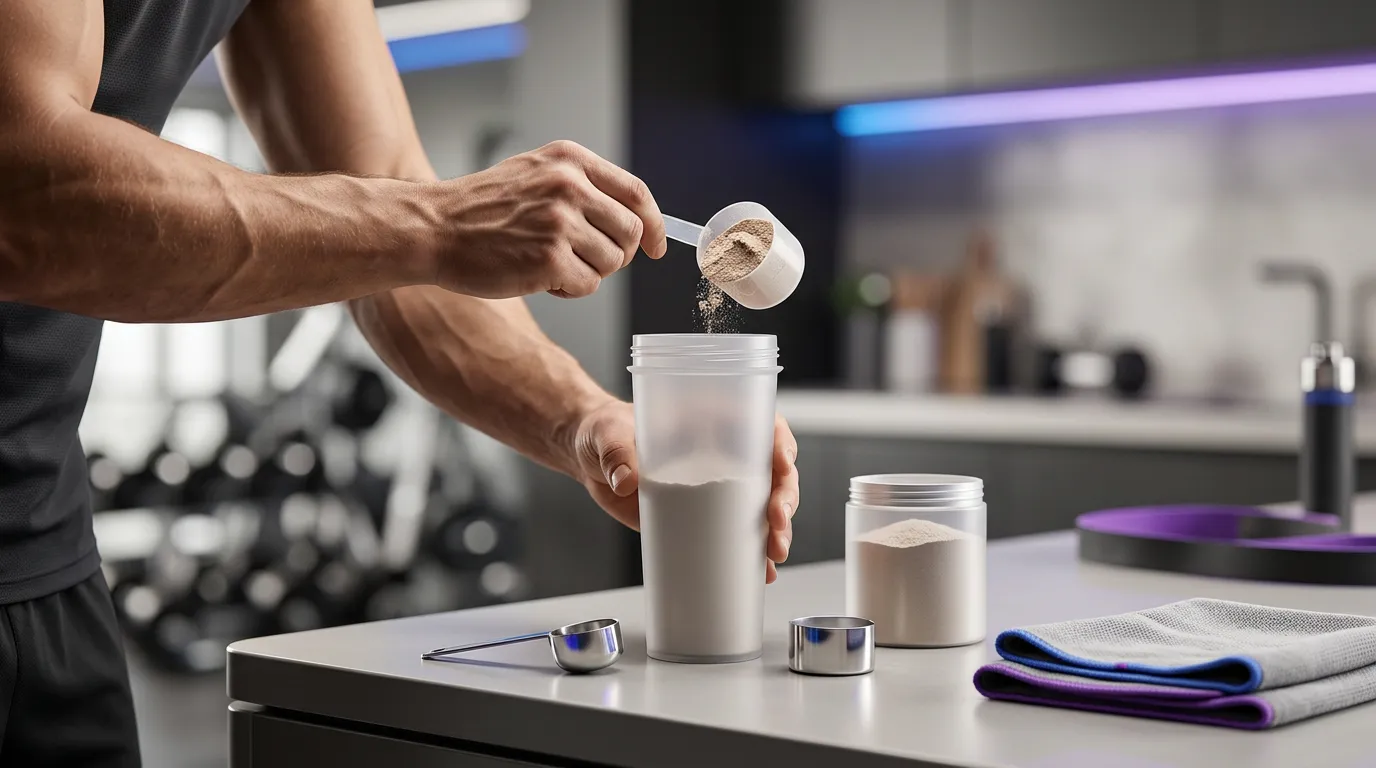
Budget whey protein: If you consistently fall short of your protein target through whole foods, a generic-brand whey runs €8-10 for 25 servings. Not mandatory, whole foods first, supplements second.
Budget Carb Sources for Energy and Recovery
Carbs fuel your workouts and accelerate recovery. You don’t need exotic or expensive carb sources to hit your numbers.
White rice vs. brown rice: White rice is cheaper, faster to digest, and ideal around training sessions. Brown rice has a lower glycemic index and more fiber, better for meals away from the gym. Both work; white rice wins on budget.
Rolled oats: The best value carb source in existence. 100 g = 370 kcal + 13 g protein + sustained energy. A bowl with milk and a banana is a complete breakfast for under €0.50.
Pasta and potatoes: Underrated staples. Potatoes cost under €1/kg cooked, deliver potassium and vitamin C alongside 80 kcal/100 g, and are highly satiating. In mashed or roasted form, they pair with anything.
Bananas: The best training snack. €0.25-0.30 each, 27 g of fast carbs, zero prep. Perfect pre- or post-workout.
Whole grain bread: Practical for adding 300-400 kcal without cooking. Two slices with peanut butter = 350 kcal in 30 seconds.
A Sample Daily Meal Plan Under €5
Here’s what a ~3,000 kcal budget bulk day actually looks like:
Breakfast (680 kcal), ~€0.75
- 100 g rolled oats + 300 ml semi-skimmed milk + 1 banana
- 3 scrambled eggs
Lunch (850 kcal), ~€1.50
- 150 g cooked white rice + 150 g grilled chicken + frozen vegetables
Snack (420 kcal), ~€0.70
- 200 g quark + 1 banana
Dinner (850 kcal), ~€1.60
- 200 g cooked pasta + 1 can tuna in tomato sauce
- 2 hard-boiled eggs
Before bed (200 kcal), ~€0.45
- 200 g quark + 1 tsp honey
Daily total: €3.80-€5.00 depending on promotions and bulk buying. Monthly budget: €110-€150.
Common Mistakes That Derail a Budget Bulk
The wrong moves will stall your progress regardless of how good your food choices are:
Eating in too large a surplus: A 1,000 kcal surplus doesn’t build twice the muscle, it builds twice the fat. Stay in the 200-400 kcal range. Clean bulk wins over dirty bulk every time, especially on a tight budget.
Skipping vegetables: Frozen broccoli, spinach, and green beans cost ~€1.50/kg and deliver micronutrients entirely absent from rice and chicken. Add them to every meal, deficiencies in zinc, magnesium, and vitamin D will cap your gains.
Eating only 2 massive meals: Hitting 3,000+ kcal in two sittings is uncomfortable and harder to digest. 4-5 smaller meals distribute your macros more evenly and are easier to sustain.
Buying supplements before nailing the basics: Pre-workouts, BCAAs, and mass gainers don’t compensate for under-eating real food. Get your diet right first, then optimize if needed.
Not tracking: If you don’t know what you’re eating, you’re guessing. Two weeks of consistent logging reveals your real patterns and shows exactly where to adjust.
Smart Shopping Strategies for Budget Bulking
A few habits that compound over time:
- Buy in bulk: Rice, oats, pasta, and lentils in 5 kg bags cost 30-40% less per kg than standard packaging.
- Choose frozen protein: Frozen chicken and fish are nutritionally identical to fresh, at roughly half the price. Buy multi-kilo bags.
- Batch cook on Sundays: Prepare 4-5 portions of rice, chicken, and roasted vegetables in one session. It prevents expensive impulse food decisions mid-week.
- Avoid protein bars: They cost €2-3 each. A boiled egg + banana achieves the same macros for €0.50.
- Use seasonal produce: Seasonal vegetables are 2-3× cheaper. Frozen is a year-round alternative with identical nutritional value.
How to Track and Adjust Your Bulk
Tracking is what turns an acceptable plan into real, measurable progress. Log your meals daily, after two weeks of learning your regular foods, it takes under 5 minutes per day.
Weigh yourself once a week, first thing in the morning on the same day. Use a 2-3 week average to read the trend, daily fluctuations from water retention and glycogen storage can be 1-2 kg and mean nothing.
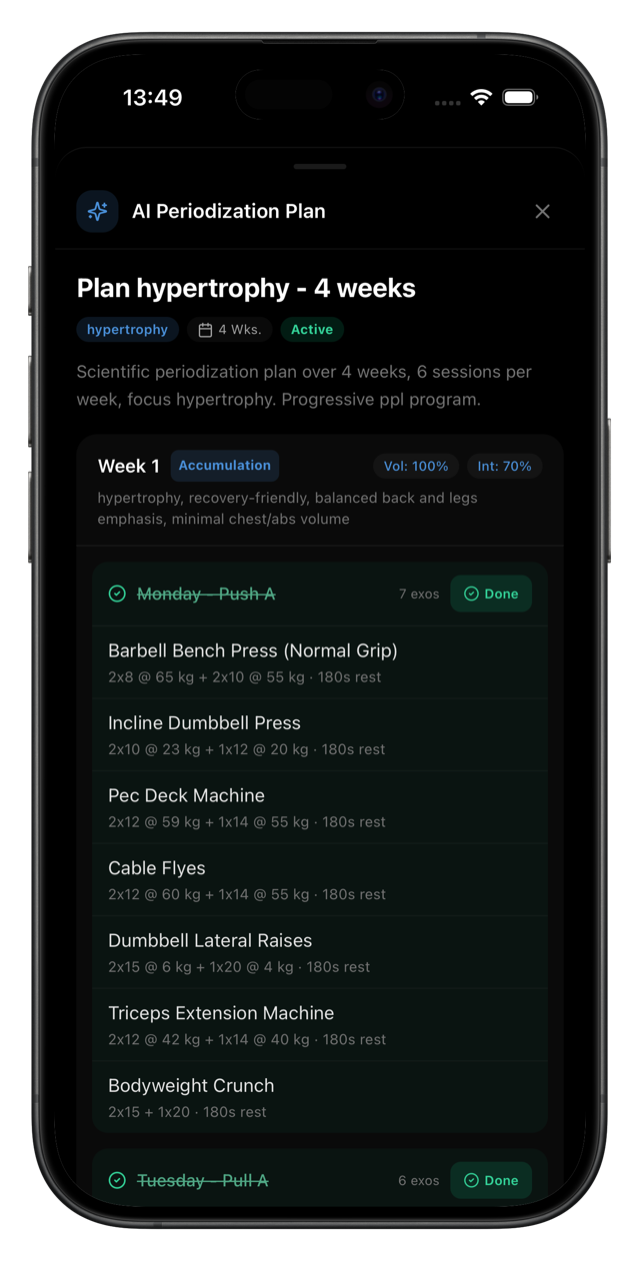
Not gaining 0.5-1 kg per month? Add 200 kcal. Gaining more than 1.5 kg/month? Cut 200 kcal. Simple. If you want those adjustments calculated automatically based on your actual training load, AIVancePro’s AI coach handles that in real time, available on iOS, first month at €3.49.
Conclusion
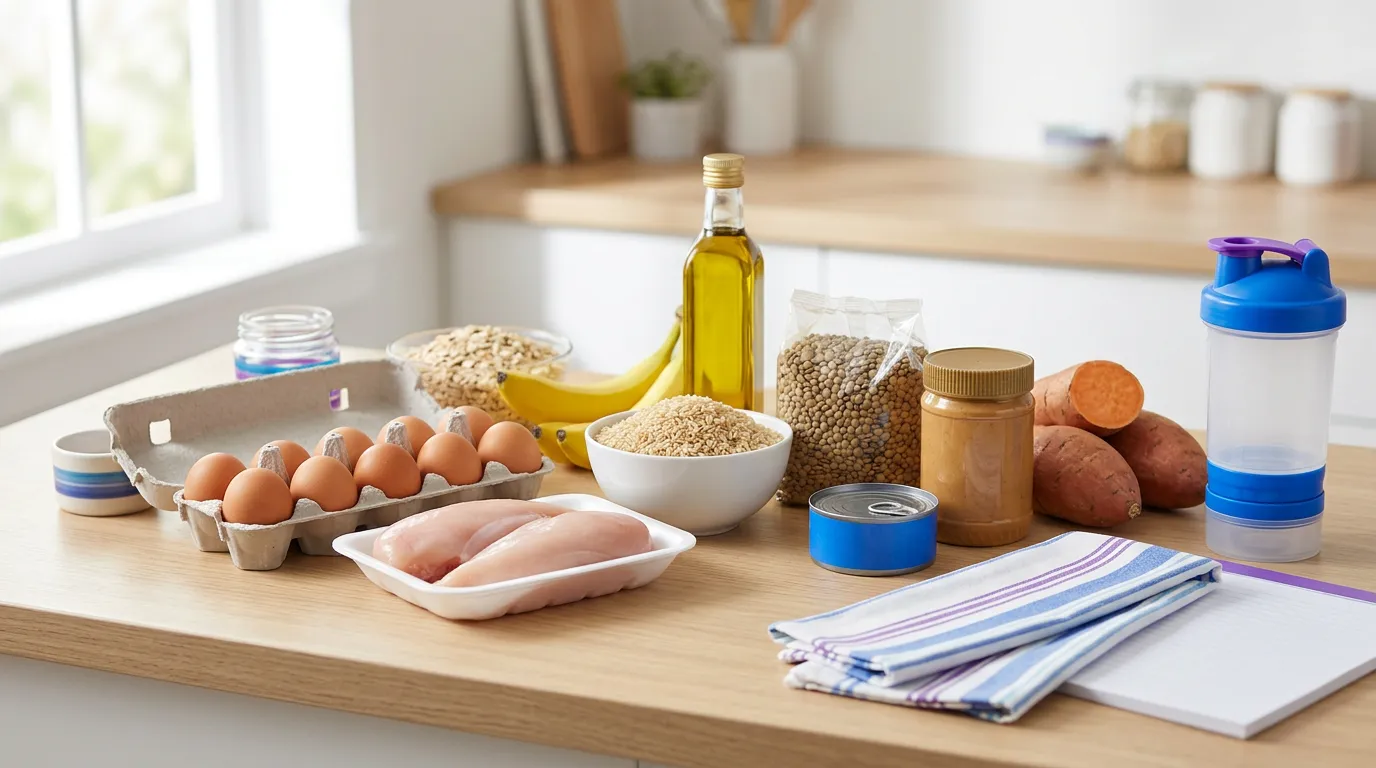
A cheap bulking diet works when it’s built on a handful of reliable, proven staples: eggs, frozen chicken, rice, oats, legumes, and quark. You don’t need premium foods or expensive supplements to build serious muscle. You need structure, consistency, and enough calories above your maintenance level.
Start with what you have. Nail the basics. Track for two weeks. Then adjust. That’s the entire system.
Health disclaimer: This article is for informational purposes only and does not constitute personalized medical or nutritional advice. Consult a qualified healthcare professional or registered dietitian before making significant changes to your diet, especially if you have any existing health conditions.
FAQ
How much does a bulking diet cost per month?
With bulk purchases and frozen proteins, you can bulk for €110-€150 per month. Protein sources (chicken, eggs, tuna) are the biggest expense, buying in volume and freezing immediately cuts costs by 20-30%.
Do I need protein powder to bulk on a budget?
No. If you consistently hit 1.8-2.2 g of protein per kg of body weight through whole foods, you don’t need whey. It’s only worth buying if you regularly fall short of your protein target despite eating well.
Are plant-based proteins sufficient for bulking?
Yes, with smart food combining. Pair legumes (lentils, chickpeas) with grains (rice, oats) to get a complete amino acid profile. You may need to eat slightly larger quantities, but it’s entirely achievable without meat.
How fast should I gain weight on a budget bulk?
Target 0.5-1 kg per month for intermediates, up to 1.5 kg for beginners. Faster gains signal excess fat accumulation. Slower gains mean your calorie surplus is too small, add 200 kcal and reassess after two weeks.
Can I bulk on a vegetarian diet cheaply?
Absolutely. Eggs, dairy, lentils, chickpeas, oats, and rice form a complete and affordable vegetarian bulking base. Track your protein carefully, aim for 1.8 g/kg, and you’ll hit your targets without expensive supplements.
← Back to blog