Want to start lifting but don’t know where to begin? This beginner strength training program for women gives you a clear, progressive structure tailored to your level. No jargon, no unrealistic 2-hour sessions, just a method that works with 3 workouts per week.
Strength training for women has nothing to do with the old stereotypes. You won’t “get bulky.” You’ll build strength, sculpt your physique, improve posture and bone density. It’s one of the best long-term health investments you can make.
Why Women Benefit from a Specific Beginner Program
Women have different physiological levers: less testosterone (so muscle gain is more gradual and aesthetic), generally faster recovery on lower-body muscles, and a higher tolerance for volume on glutes and legs.
A solid beginner program for women should:
- Prioritize compound movements (squat, deadlift, row) that work multiple muscles at once
- Emphasize the lower body (40-50% of volume) without neglecting the upper body
- Include systematic core work
- Allow measurable progression week after week
The classic beginner mistake? An hour of cardio plus light isolation exercises. Result: little muscle gained, no real transformation. The actual key is progressive overload on basic movements.
The 6 Foundational Exercises to Master
Before thinking “program,” learn these 6 movements. They cover 90% of your needs.
1. Squat (legs, glutes)
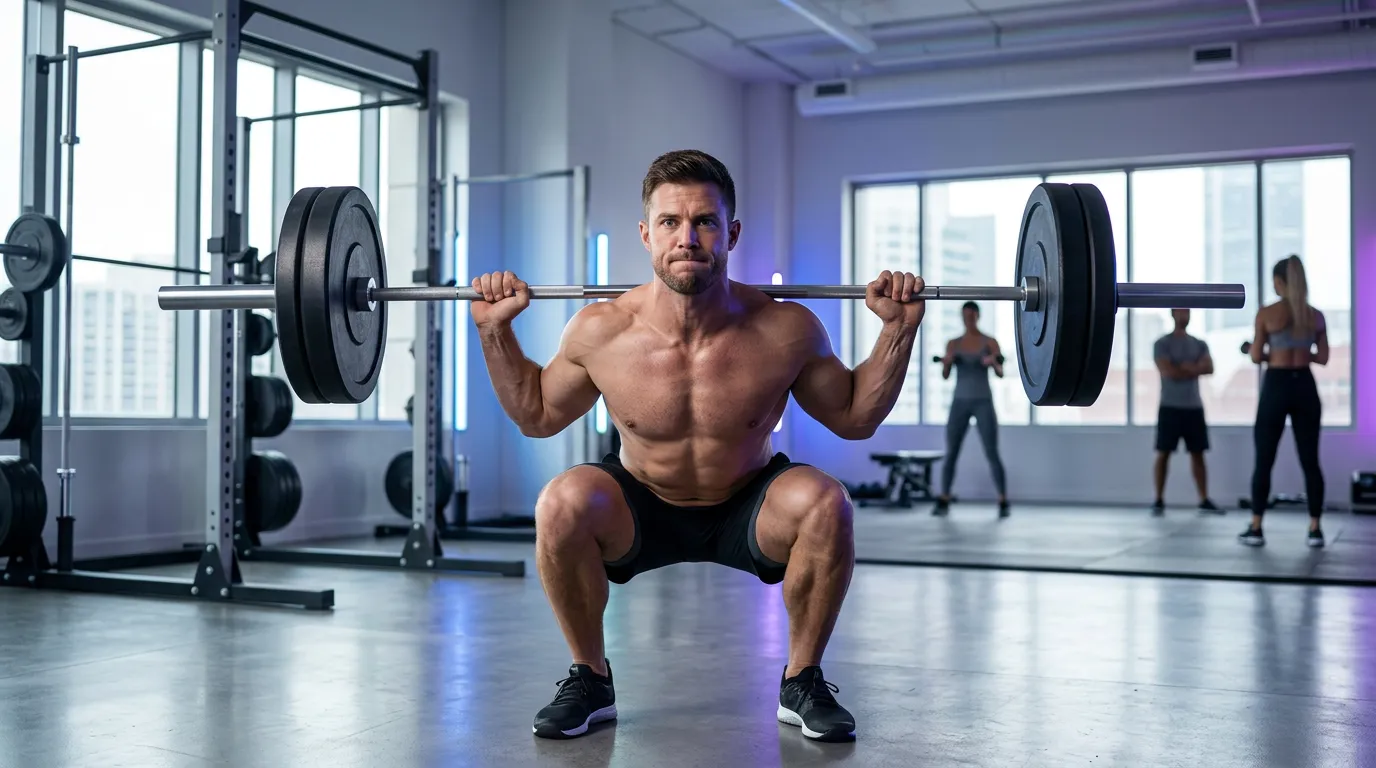
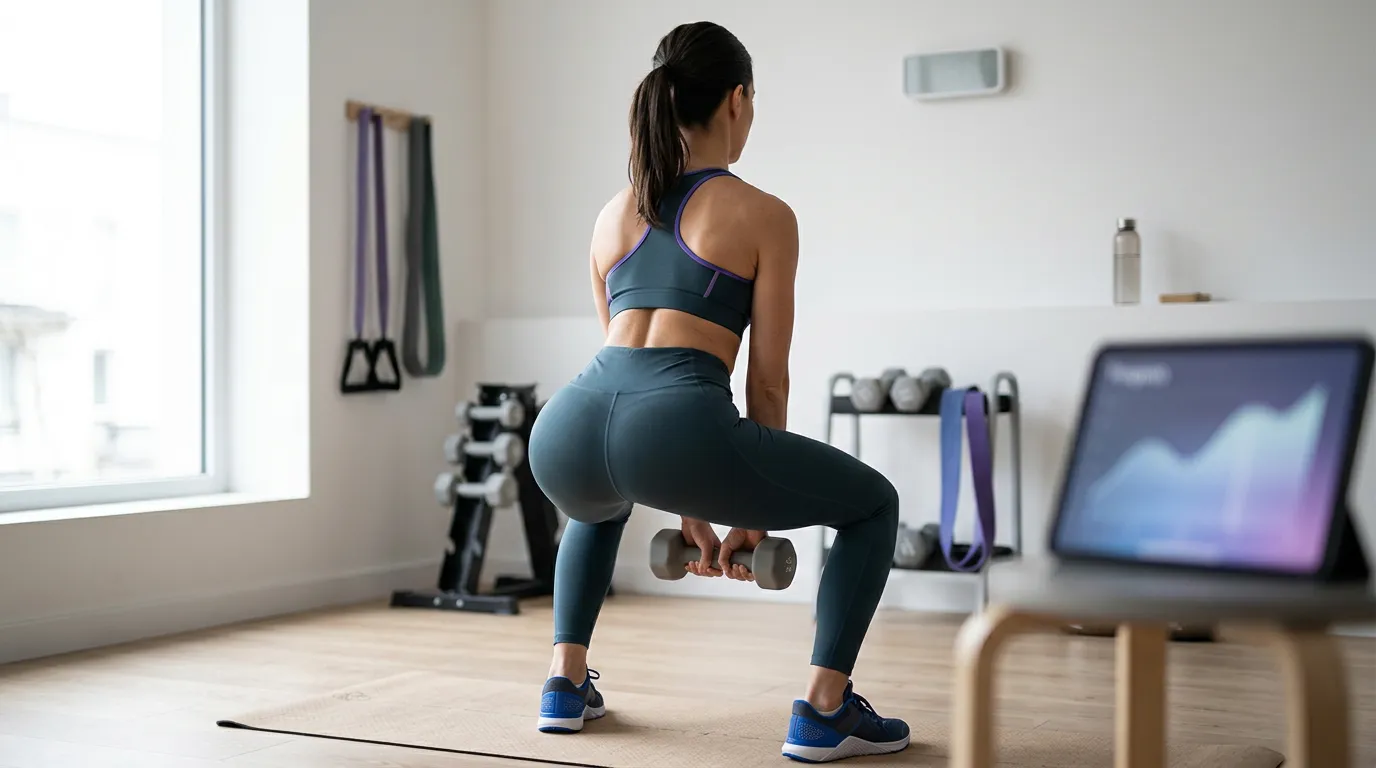
Feet shoulder-width apart, lower as if sitting on a low chair. Keep your back straight, weight on heels. Start with bodyweight, then add a barbell or dumbbells.
2. Romanian Deadlift (hamstrings, glutes, back)
Barbell or dumbbells in front of thighs, push hips back as you lower. Feel the hamstring stretch. Don’t go lower than your flexibility allows without rounding the back.
3. Hip Thrust (glutes)
Upper back on a bench, weight on hips, drive hips up until shoulders and knees align. The king exercise for glutes.
4. Push-Ups (chest, triceps, core)
If full push-ups are too hard, start on knees or against a wall. Goal: 3 sets of 10 clean reps before progressing to standard push-ups.
5. Dumbbell Row (back, biceps)
One knee and hand on a bench, pull the dumbbell toward your hip while squeezing the shoulder blade. Builds the back and corrects posture.
6. Plank (core)
Forearm push-up position, body braced, glutes squeezed. Aim for 3 x 30 seconds initially, progress to 1 minute.
The 3-Day Weekly Program
Here’s the 8-week structure. Three spaced workouts (e.g., Monday/Wednesday/Friday), with at least one rest day between sessions.
Workout A, Lower Body + Core
- Squat: 4 x 8-10
- Hip thrust: 4 x 10-12
- Romanian deadlift: 3 x 10
- Walking lunges: 3 x 10 per leg
- Plank: 3 x 30-45 sec
Workout B, Upper Body
- Push-ups (or variation): 4 x max
- Dumbbell row: 4 x 10 per arm
- Dumbbell shoulder press: 3 x 10
- Lat pulldown (or band): 3 x 12
- Bicep curl + tricep extension: 3 x 12 each
Workout C, Full Body Progressive
- Goblet squat: 4 x 10
- Romanian deadlift: 4 x 8
- Incline push-ups: 3 x 10-12
- Band row: 3 x 12
- Mountain climbers: 3 x 30 sec
Rest between sets: 60-90 seconds. This is crucial, not 30 seconds like HIIT videos suggest.
How to Progress Week After Week
Progressive overload is the only real lever for transformation. Concretely:
- Weeks 1-2: learn technique with bodyweight or very light loads. No ego.
- Weeks 3-4: add 1-2 kg per exercise as soon as you complete all sets cleanly.
- Weeks 5-6: increase reps (8 to 10, then 10 to 12) before increasing weight again.
- Weeks 7-8: start loading seriously. You should feel real resistance on the last 2 reps.
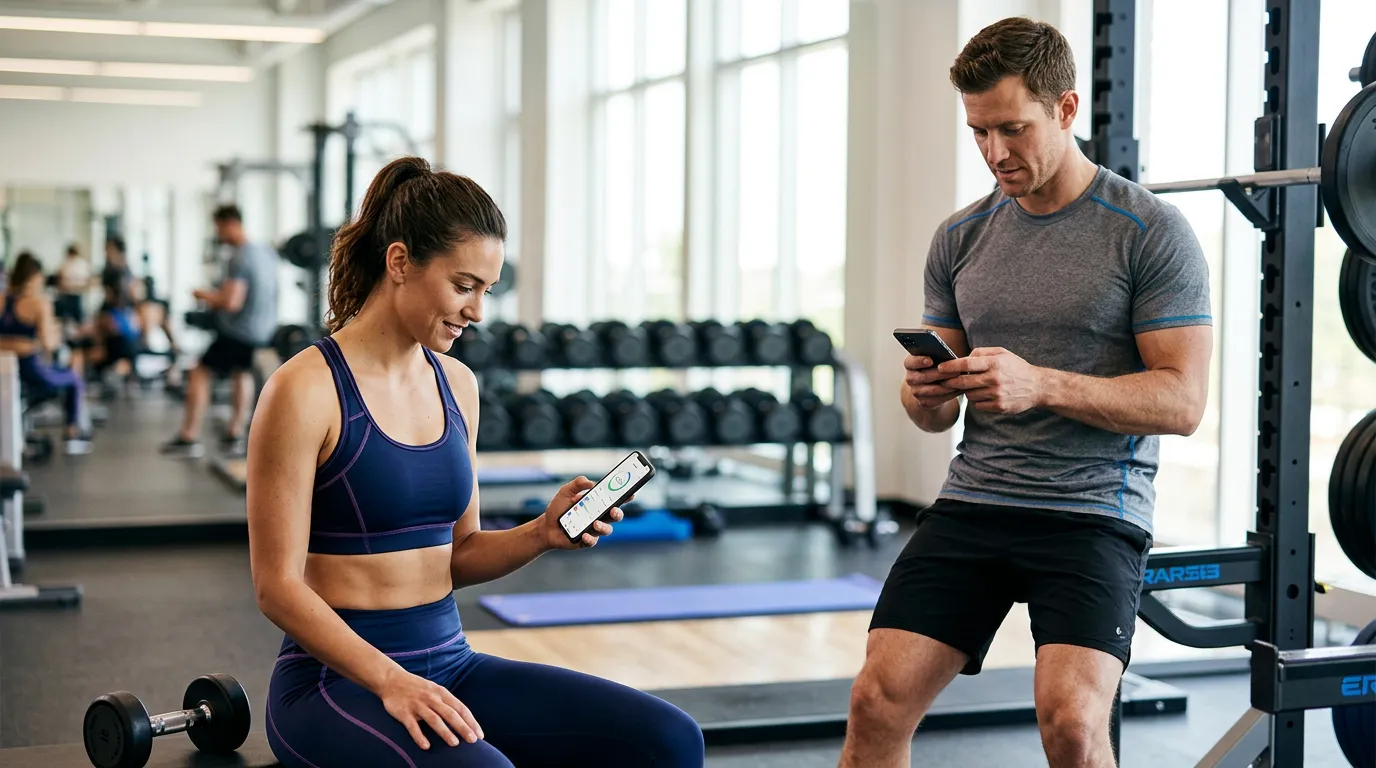
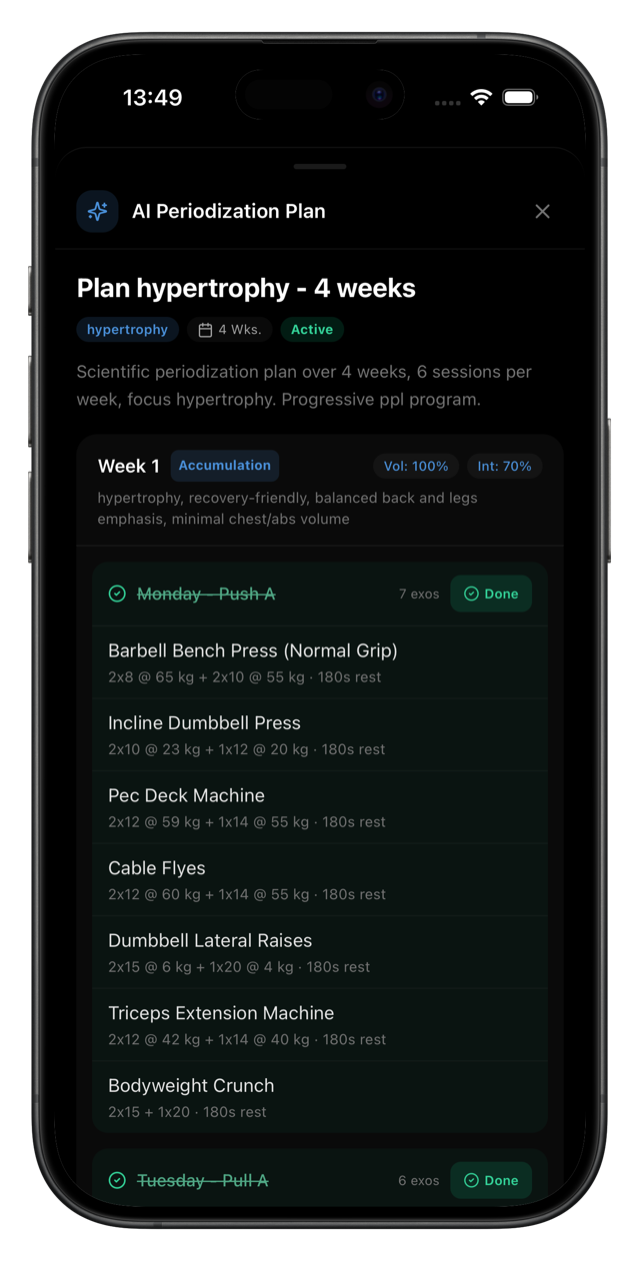
Log your performance in a notebook or app. If you don’t measure, you don’t progress. With AIVancePro, the integrated AI conversational coach automatically adjusts your loads and reps based on your feedback and progression, you don’t have to calculate anything.
Nutrition: What Really Matters as a Beginner
No need to eat 200g of protein per day or weigh every grain of rice. Three simple principles:
1. Eat enough protein
Aim for 1.4 to 1.8 g per kg of body weight. For 60 kg / 130 lbs, that’s 85-110 g/day. Sources: eggs, chicken, fish, tofu, cottage cheese, Greek yogurt, lentils.
2. Don’t drastically cut calories
A common mistake: trying to lose fat AND build muscle on 1,200 kcal. Result: fatigue, stagnation, frustration. Eat at maintenance (or +100-200 kcal if very lean) for the first 3 months.
3. Hydrate
2 to 2.5 liters of water per day. Muscle is 70% water; without hydration, no recovery.
Mistakes That Will Stall Your Progress
- Doing too much cardio: 1-2 sessions of 30 min are plenty. More, and you’ll eat into recovery.
- Switching programs every 2 weeks: stick with the same structure for at least 8 weeks to measure real progress.
- Skipping the warm-up: 5-10 min of mobility + 1-2 light sets before each compound lift.
- Neglecting sleep: 7-9 hours per night. Muscle is built during sleep.
- Daily weigh-ins: weight fluctuates 1-2 kg with hydration, cycle, sodium. Weigh in once a week max, in the morning fasted.
Conclusion
A beginner strength training program for women that actually works fits into 3 weekly sessions, compound movements, and measured progression over at least 8 weeks. No fancy equipment or complicated routines needed, consistency and progressive overload do 80% of the job.
If you want a program that adapts in real time to your feedback, equipment and schedule, AIVancePro is available on iOS (first month at €3.49). The conversational AI coach adjusts your sessions week after week without you having to think about it.
This article is for informational purposes. Before starting a strength training program, especially with health conditions, pregnancy, or recent injury, consult a healthcare professional or certified coach.
FAQ
How long until I see results from a beginner strength program?
First strength gains appear within 2-3 weeks. Visible changes (physique, tone) take 8 to 12 weeks with proper nutrition and consistent 3-session weeks.
Can I do this program at home without equipment?
Yes for the first weeks. Beyond that, you’ll need dumbbells, bands, or a barbell. Without progressive loads, plateaus arrive quickly.
Will I get too muscular?
No. Women produce 10 to 30 times less testosterone than men. Visible muscle gain takes years of intense training, you won’t “bulk up” in 3 months.
Do I need supplements?
Not as a beginner. A balanced diet with enough protein is enough. If meeting protein targets is hard, whey can help, but it’s secondary.
What’s the best time to train?
Whenever you’ll be consistent. Morning, noon, or evening, what matters is sticking with it for months. Just avoid the 2 hours right before bedtime.
← Back to blog