Pre and post workout nutrition is the question every serious lifter asks: you know what you eat around training matters as much as the session itself, but between conflicting Instagram advice and elite protocols that don’t fit your real life, it gets confusing fast. With AIVancePro, your conversational AI coach Vance adapts your nutrient timing to your schedule, goal, and actual training load, so every meal serves your progress. In this guide, we break down the science and give you concrete plans, whether you train fasted in the morning or after a full workday.
Why Nutrient Timing Around Training Matters
When you push heavy weights, you create micro-tears in your muscle fibers and partially deplete your glycogen stores. Without carbs and protein delivered at the right moment, your body slows protein synthesis, extends recovery time, and limits the adaptations that drive growth in your chest, back, or legs.
The anabolic window often sold as a 30-minute emergency is actually wider: from one hour before to 2-3 hours after training, your body is more efficient at using incoming nutrients. But this window only matters if your overall daily intake is consistent. If you hit 1.6-2.2g of protein per kg of body weight spread across 4-5 meals, timing becomes a leverage tool, not a rescue mission.
The real question isn’t “do I need to eat in panic right after training?” but “how do I structure my 2-3 meals around training to maximize recovery and next-session performance?”
Pre-Workout Meal: Timing and Composition
The goal of a pre-workout meal is threefold: top off muscle glycogen, supply available amino acids to limit catabolism, and keep blood sugar stable through your working sets.
2 to 3 hours before training, aim for a complete, digestible meal:
- 80-120g of rice, whole pasta, or sweet potato (cooked weight)
- 150-200g of lean protein (chicken, turkey, egg whites, canned tuna in water)
- A portion of green vegetables for micronutrients
- 1 tablespoon of olive oil or half an avocado for fats
30-60 minutes before, if you couldn’t fit in a full meal (midday or post-work training), go for a quick snack:
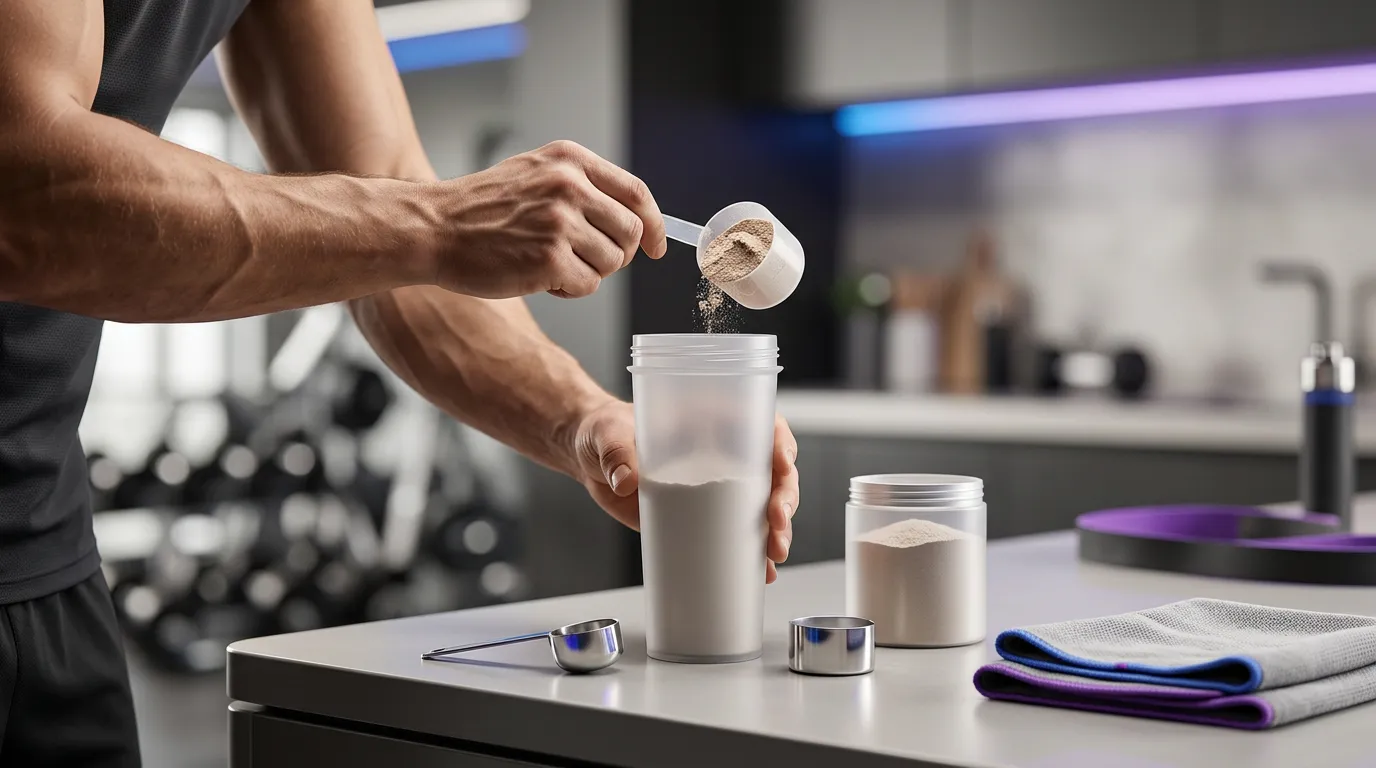
- 1 ripe banana + 30g of whey isolate
- 1 slice of whole grain bread + 1 spoon of honey + 20g of almonds
- 1 Greek yogurt 0% + 30g of oats + berries
Avoid high-fat or high-fiber meals in the hour before training: slow digestion equals heaviness during sets and blood flow diverted from working muscles. If you’re about to squat or deadlift heavy, the last thing you want is a burger sitting in your stomach.
During the Session: Eat or Just Drink?
For a standard 60 to 90-minute lifting session, your pre-workout meal covers your needs. Water is your absolute priority: aim for 500-750ml spread across the session, more if you sweat heavily or train in a warm gym.
For longer sessions (over 90 min) or high-volume strength work, you can add:
- 30-40g of fast carbs in your bottle (maltodextrin, dextrose, or simply diluted fruit juice)
- 5-10g of EAAs or BCAAs if you train fasted or far from your last meal
For most intermediate lifters AIVancePro targets, intra-training nutrition stays optional. Spend your supplement budget on creatine (3-5g daily) and a quality whey instead, those have the strongest evidence base.
Post-Workout Nutrition: The Window That Actually Matters
After training, your body wants two things: replenish glycogen and trigger protein synthesis to repair the fibers you just hammered. This is where pre and post workout nutrition becomes strategic.
Within 30-60 minutes after training, aim for a meal or snack with:
- 30-40g of fast-digesting protein (whey, shredded chicken breast, egg whites)
- 60-100g of carbs depending on your size and session intensity (white rice, sweet potato, whole grain bread, banana)
- Low fat content (fats slow absorption, save them for the next meal)
Concrete example for a 75kg lifter in a building phase:
- Shake: 30g whey + 1 banana + 50g oats blended together
- Followed 1h30 later by a real meal: 150g lean ground beef, 200g cooked rice, vegetables, 1 spoon of oil
In a cut, keep the same structure but adjust carbs to 40-60g while keeping protein at 30-40g to preserve muscle mass.
How AIVancePro Adapts Your Nutrition to Your Training
Where most nutrition advice gets generic fast, Vance, AIVancePro’s conversational AI coach, cross-references multiple inputs to give you recommendations that fit YOUR reality: your goal (bulk, cut, recomp), your training time, your reported fatigue, and the type of session you just did (heavy full body vs. isolation arms vs. cardio).
Concretely, if you tell him “I have legs tonight at 7pm, I had lunch at 1pm,” Vance will suggest a calibrated snack at 5:30pm (40g carbs + 20g protein) and a specific post-workout meal with quantities and alternatives based on what’s in your fridge. You can also ask “what can I swap the chicken for tonight?” and get 3 macro-equivalent alternatives.
This conversational adaptation is what separates a standard workout app from real coaching. And it’s exactly what’s missing when you follow a generic PDF downloaded online.
Common Mistakes to Avoid
Skipping the post-workout meal “to cut faster”: you compromise recovery and lose muscle, not fat. Caloric deficit is managed across the day, not by skipping the meal that maximizes nutrient utilization.
Stacking pre-workout supplements: caffeine + beta-alanine + citrulline + homemade pre-workout is often just marketing. A simple black coffee 30 min before does 80% of the job for most people.
Eating too much fat right before or after: lipids slow gastric emptying. Save them for meals further from training.
Neglecting hydration: 2% dehydration equals 10-20% performance loss on heavy sets. Your 1L water bottle is your best free supplement.
Copying an influencer’s plan: a pro lifter has a training volume, daily activity, and genetics that have nothing to do with a 30-year-old office worker training 4x/week. Your nutrition has to reflect YOUR reality.
Concrete Plan: 3 Time-Slot Scenarios
Morning session 7am (before work):
- Wake up 6am: 1 banana + 1 coffee + 20g whey (if tolerated)
- Training 7am-8am
- Breakfast 8:30am: 4 eggs + 80g oats + berries + 1 spoon peanut butter
Lunch session (midday break):
- Breakfast 7am: solid and complete (eggs, oats, fruit)
- Snack 11am: 1 Greek yogurt + 1 fruit
- Training 12:30pm-1:30pm
- Post-meal 2pm: 150g chicken + 200g rice + vegetables + olive oil
Evening session 7pm (after work):
- Lunch 1pm: balanced, around 600-700 kcal
- Snack 5pm: 1 banana + 30g whey or 40g almonds + 1 fruit
- Training 7pm-8:30pm
- Post-meal 9pm: 150-200g protein + 80-100g carbs + vegetables
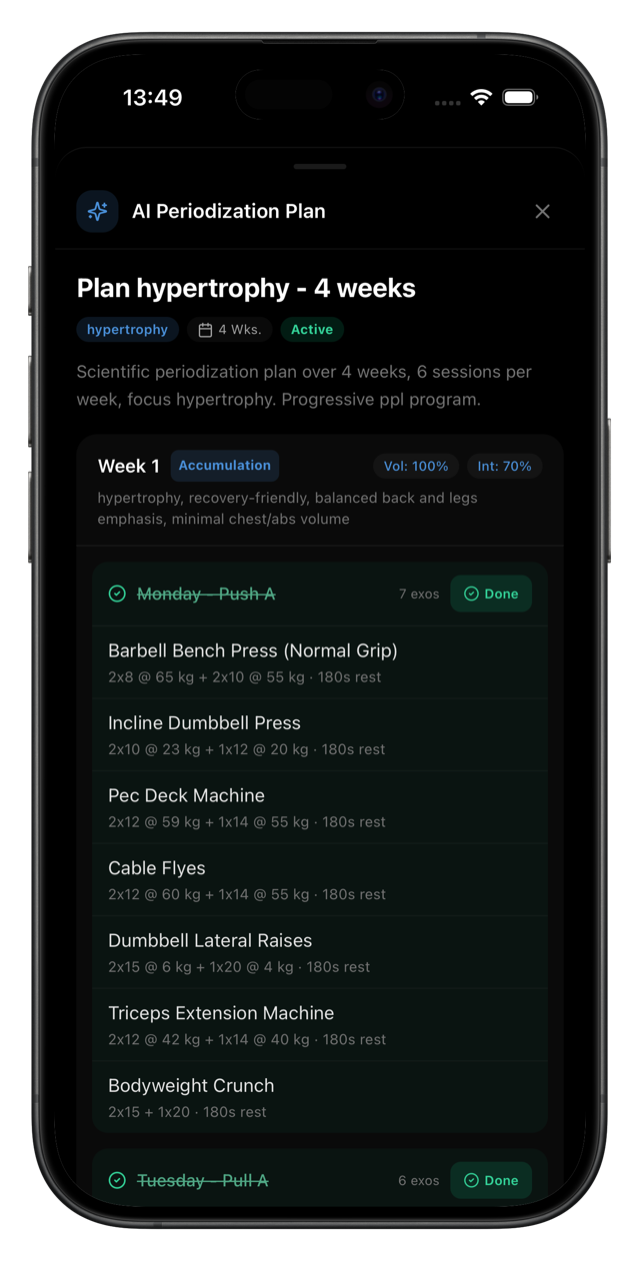
Vance can generate this kind of daily plan inside AIVancePro through a few exchanges, then readjust it each week based on your feedback about fatigue, appetite, and gym performance.
Conclusion
Pre and post workout nutrition isn’t mysterious: a complete meal 2-3h before or a snack 30-60 min before, plenty of water during, and a meal with 30-40g of protein and 60-100g of carbs within the hour after. The rest is personal adjustment based on your goal, schedule, and digestive tolerance.
That’s exactly what AIVancePro does daily: your conversational AI coach Vance accounts for your schedule, today’s session, and your constraints to give you precise recommendations, no generic PDF or copy-paste. Download AIVancePro on iOS or Android, the first month is 3.49€ instead of 6.99€, enough to seriously test whether your AI coach delivers before the month is out.
This article is informational and does not replace medical or dietitian advice. If you have a specific medical condition (diabetes, digestive disorders, cardiac history), consult a healthcare professional before changing your nutrition.
FAQ
Do I have to take whey right after training?
No, whey is convenient but not mandatory. If you can eat a real meal with 30-40g of protein within the hour after (chicken, eggs, tuna, cottage cheese), it’s equally effective. Whey just stays the fastest option when you leave the gym without time to cook immediately.
How long before training should I eat?
Ideally a full meal 2 to 3 hours before, or a quick snack 30 to 60 minutes before if time is tight. The goal is to arrive at training without digestive heaviness but with enough available energy.
Can I train fasted?
Yes, it’s viable for short sessions (under 1h) at moderate intensity. For heavy lifting or long sessions, a minimum of carbs 30-60 min before clearly improves performance and limits muscle breakdown. If you want to explore this protocol, ask Vance inside AIVancePro to adapt your plan accordingly.
How many carbs do I need after training?
Between 60 and 100g for a 70-85kg lifter in a building phase, 40 to 60g in a cut. Adjust based on your size, daily activity, and digestive tolerance. Simple rule: the more intense and longer the session, the more carbs matter post-workout.
Do I need BCAAs or EAAs on top of whey?
If you hit 1.6-2.2g of protein/kg/day with quality whey, BCAAs and EAAs are redundant. Spend your budget on creatine monohydrate (3-5g daily), which has proven effects on strength and hypertrophy. BCAAs only have niche value if you train fasted far from your meals.
← Back to blog