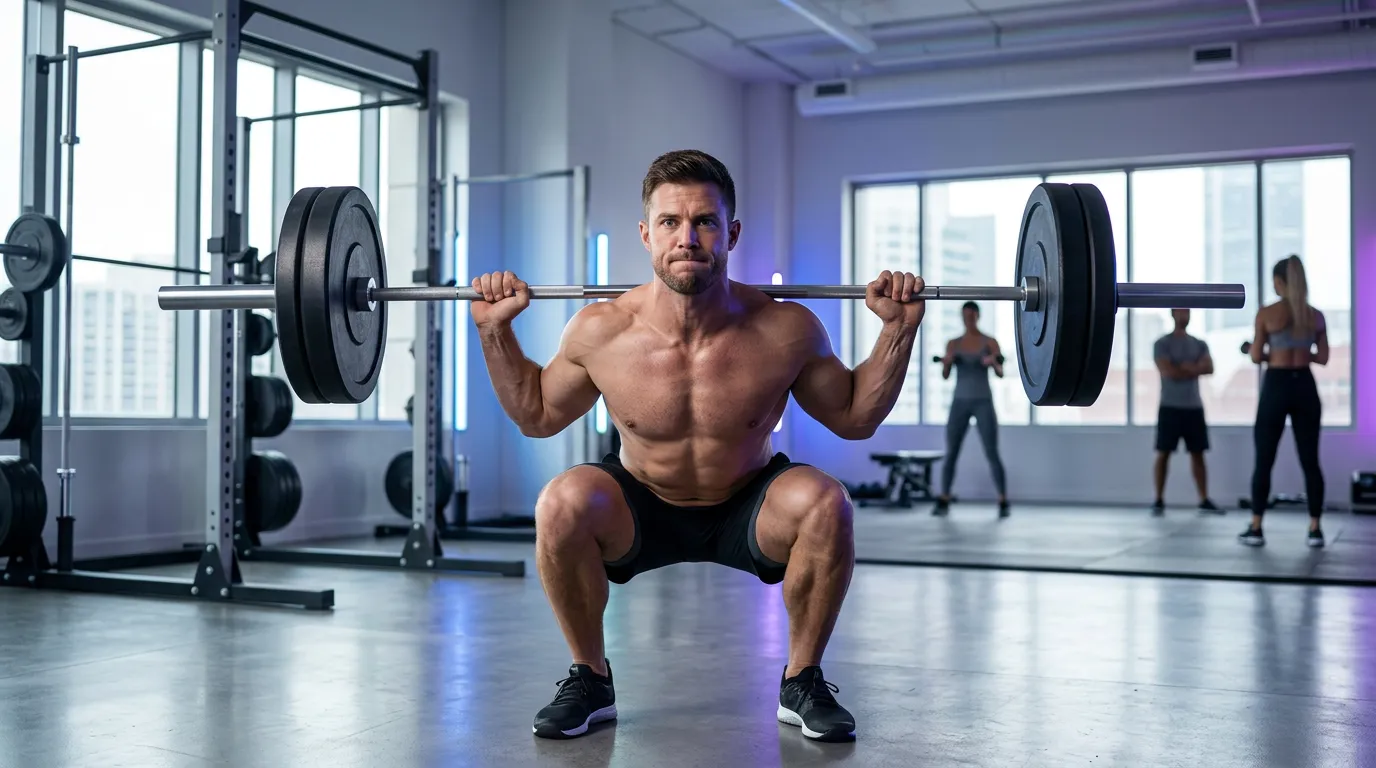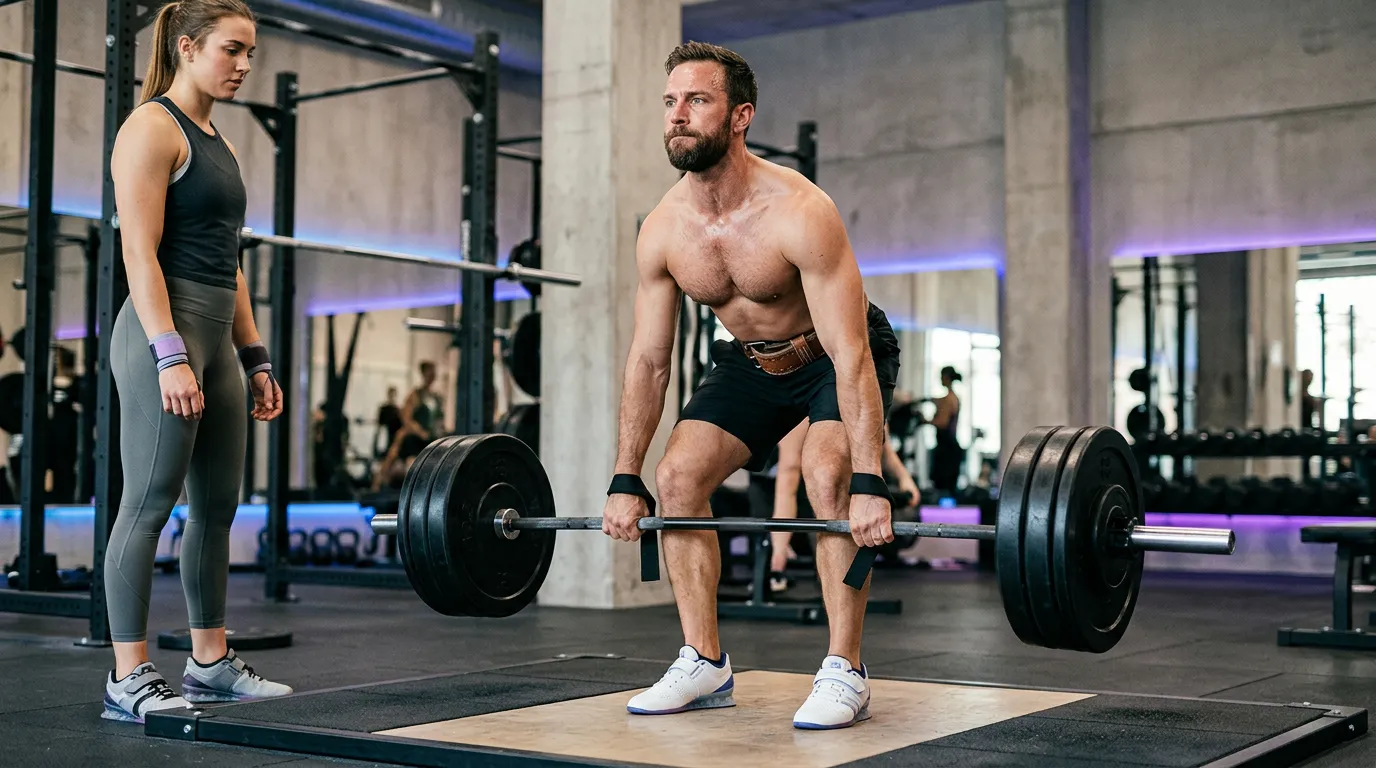
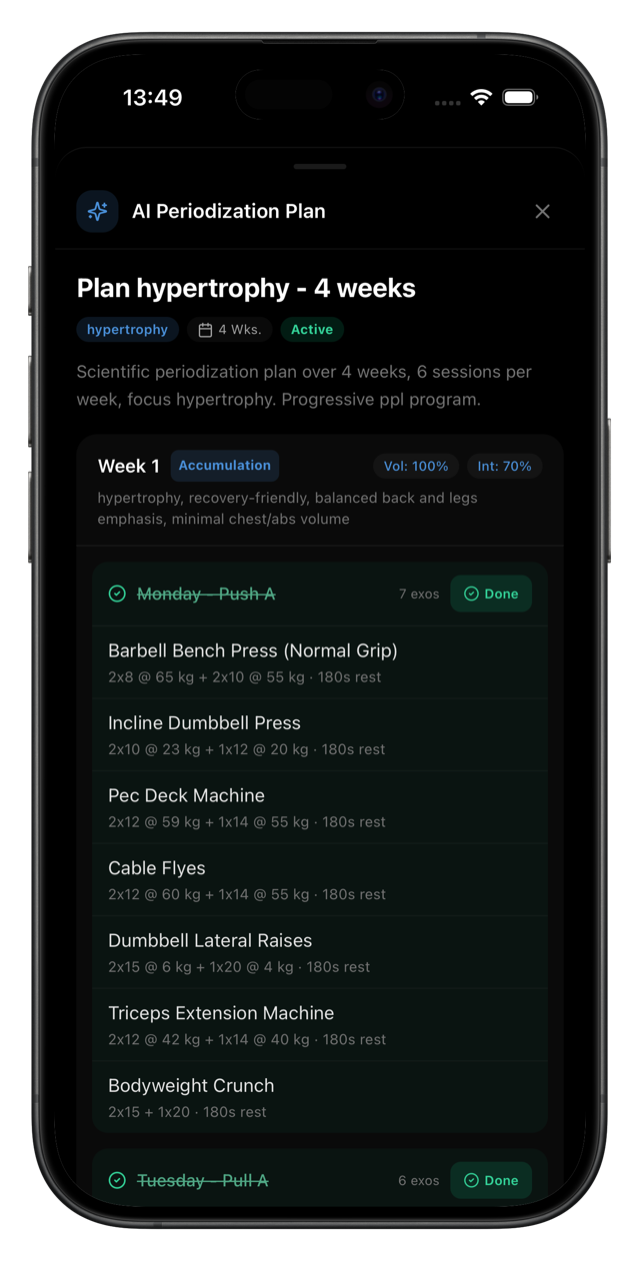
You’ve kept the same plates on the bar for weeks, you finish your sets without much of a grind, and deep down you keep asking: am I lifting heavy enough to actually grow? It’s one of the most common doubts when you’ve pieced your program together on your own and progress has stalled. The good news, there are simple markers to check. With AIVancePro, your conversational AI coach Vance reads your loads set after set and tells you, numbers in hand, whether you’re close enough to failure to trigger growth.
In short
You’re lifting heavy enough when your last 2 to 3 reps get genuinely hard, leaving 0 to 3 reps in reserve before technical failure. If you finish a set with 5 or more reps still in the tank, the weight is too light for maximum hypertrophy. The right gauge isn’t an absolute number on the bar, it’s how hard those final reps feel.
Why load matters (but not the way you think)
Load isn’t the goal in itself. What grows a muscle is mechanical tension: forcing your fibers to produce a high effort, close enough to their limit. A weight that’s too light creates little tension on the early reps and only recruits your big fibers at the very end of the set.
Many self-taught lifters confuse ‘sweating’ with ‘stimulating’. You can leave a session out of breath with light weights and never reach the threshold that drives adaptation. Push too heavy, on the other hand, and you wreck your form and recovery with no extra benefit.
The real dial is proximity to failure, measured in reps in reserve (RIR). That, not the number on the bar, decides whether your load is enough.
Am I lifting heavy enough?
Straight answer: you’re lifting heavy enough when your last 2 or 3 reps are truly hard, with 0 to 3 reps in reserve before technical failure. If you could still grind out 4, 5 reps or more at the end of your set, the weight is too light for hypertrophy.
In practice, on a planned set of 10, the 10th rep should demand real effort and a clear slowdown of the bar. Based on the reps-in-reserve work popularized by coaches Eric Helms and Mike Israetel, most of your working sets should land between 0 and 3 RIR to drive growth without burning your recovery.
To put a number on it, estimate your max strength first, then aim for sets around 65 to 80 % of that max depending on your rep range. Our guide on how to improve your bench press walks through this on a key lift.
Signs you’re not lifting heavy enough
- You finish nearly every set without a grimace, the bar flying up to the last rep.
- You’ve used the same weight for over a month with zero progress.
- You never feel any working sensation or soreness the next day on the target muscles.
- You could hold a conversation mid-set, the effort is that manageable.
If several of these ring true, you’re probably parked in your comfort zone. Your body has no reason to adapt to an effort it already masters. That’s the number one cause of stalling, which we break down in our article on why you’re not building muscle.
Signs you’re lifting too heavy
Heavier isn’t always better. You’re going too heavy if:
- Your form breaks by the 3rd rep (rounding back, bouncing the bar, half reps).
- You need a spotter to finish almost every set.
- You feel joint pain rather than muscle effort.
- You can’t recover from one session to the next.
Ego lifting is expensive: less real tension on the target muscle, more injury risk, and fatigue that sabotages your next sessions. A weight that’s heavy enough is still one you control through the full range.
How to adjust your load in practice
- Pick a rep range (say 8 to 12 for hypertrophy).
- Choose a weight that leaves you 1 to 2 reps in reserve on your first working set.
- When you hit the top of the range on every set with 1 to 2 RIR, add 2.5 to 5 % at the next session.
- Drop back to the bottom of the range with the new weight and repeat.
This is progressive overload: you steadily raise the demand to force adaptation. Without it, even a correct load eventually becomes too light as you get stronger. To set the right volume around those loads, see our breakdown of how many sets per muscle per week.
How AIVancePro knows if you’re lifting enough
The catch with self-assessment is that your sense of RIR drifts with fatigue and habit. That’s where Vance, the conversational AI coach inside AIVancePro, changes things.
Every set, you log your weight and reps. You push 185 lb on the bench for 9 reps when your plan targeted 8 at 1 RIR? Vance sees it, recalibrates your target load for next session, and explains why. You stall three sessions in a row on the same weight without adding reps? It flags the plateau and suggests an adjustment (deload, variation, rep-range change) instead of leaving you to guess.
You stop asking ‘am I lifting heavy enough’ into the void: you get an objective read on your progress. Where an in-person coach runs 40 to 60 € a session, AIVancePro costs 3.49 € for the first month.
Conclusion
Lifting heavy enough isn’t about chasing the heaviest possible weight, it’s about staying close enough to failure (0 to 3 reps in reserve) on your working sets while keeping clean form. Watch your final reps, apply progressive overload, and adjust the moment the effort feels easy again.
If you’re tired of guessing, let Vance read your loads for you. AIVancePro adapts your targets session after session and tells you plainly when to push heavier. Try the first month at 3.49 € and cancel anytime. Available on iOS and Android.
Disclaimer: this content is general and informational. It does not replace advice from a healthcare professional. If you experience pain, injury, or have a medical condition, consult a doctor or physiotherapist before adjusting your loads.
FAQ
How do I know if I’m lifting heavy enough without going to failure?
Watch the speed of your final reps: if the bar slows down clearly and you reckon you have 1 to 3 reps left at most, you’re in the right zone. You don’t need to hit full failure every time.
I’ve stalled on bench press for 3 weeks, is the weight the problem?
Often yes, but not always. If your reps aren’t climbing and the weight still feels comfortable, add load. If the weight is already hard but you’re not recovering, the issue is more likely volume or sleep.
Do I have to lift heavy to build muscle?
Not necessarily very heavy. Muscle is built across a wide range, from 5 to 30 reps, as long as you push close to failure. A moderate weight taken near failure stimulates as much as a heavy one.
How many reps in reserve should I aim for?
Between 0 and 3 RIR on most working sets. Save the 0-RIR efforts (full failure) for isolation exercises, which are safer than big compound lifts.
← Back to blog